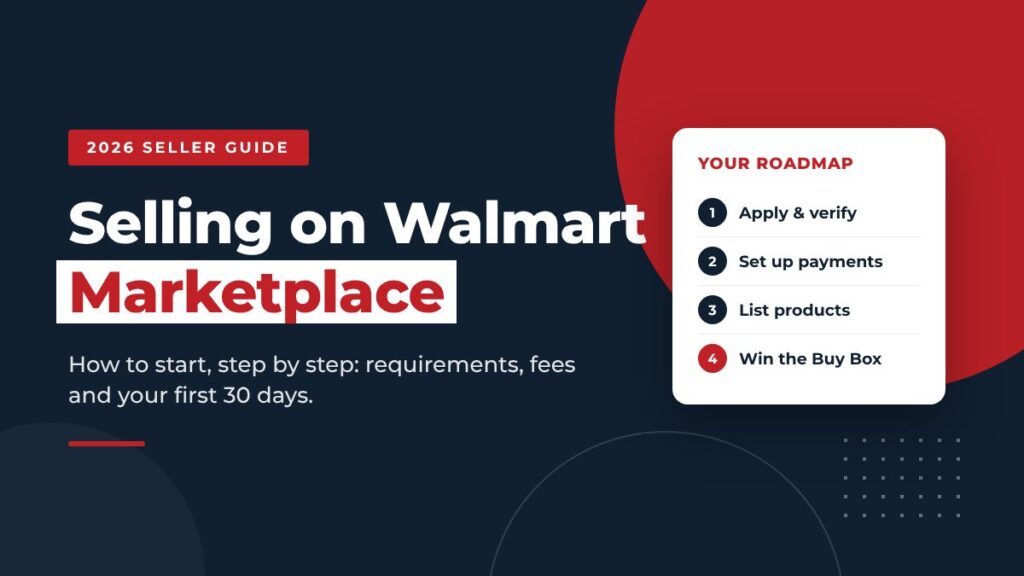
The eCommerce industry continues to create new opportunities for businesses looking to reach more customers and increase their online revenue. While Amazon remains a major platform for online sellers, Walmart Marketplace has become another attractive option for businesses wanting to expand their presence.Understanding Walmart Marketplace vs Amazon can help businesses choose the right platforms for expanding their online operations.
Selling on Walmart Marketplace allows businesses to showcase their products to Walmart’s online customers without operating their own retail infrastructure. From small businesses to established eCommerce brands, sellers can use the platform to introduce new products and develop additional revenue streams.Businesses looking to sell on marketplaces can use Walmart as an additional sales channel.
However, starting a Walmart business requires proper preparation. You need to understand Walmart seller account requirements, product selection, account registration, marketplace fees, and order fulfillment before launching your store.
In this guide, we’ll cover everything you need to know about how to start selling on Walmart, managing your products, and building a successful Walmart Marketplace business.
Ready to grow faster? Explore our Walmart marketplace management services and let our experts take care of the heavy lifting.
What Is Walmart Marketplace?
Walmart Marketplace is an online selling platform where approved third-party businesses can list and sell products through Walmart.com.
Unlike traditional Walmart suppliers, third-party marketplace sellers manage their own inventory, product listings, pricing, and fulfillment operations. Walmart provides the online platform where customers can browse products and place orders.
For example, a business selling home improvement products can create listings on Walmart Marketplace and reach customers searching for those items.
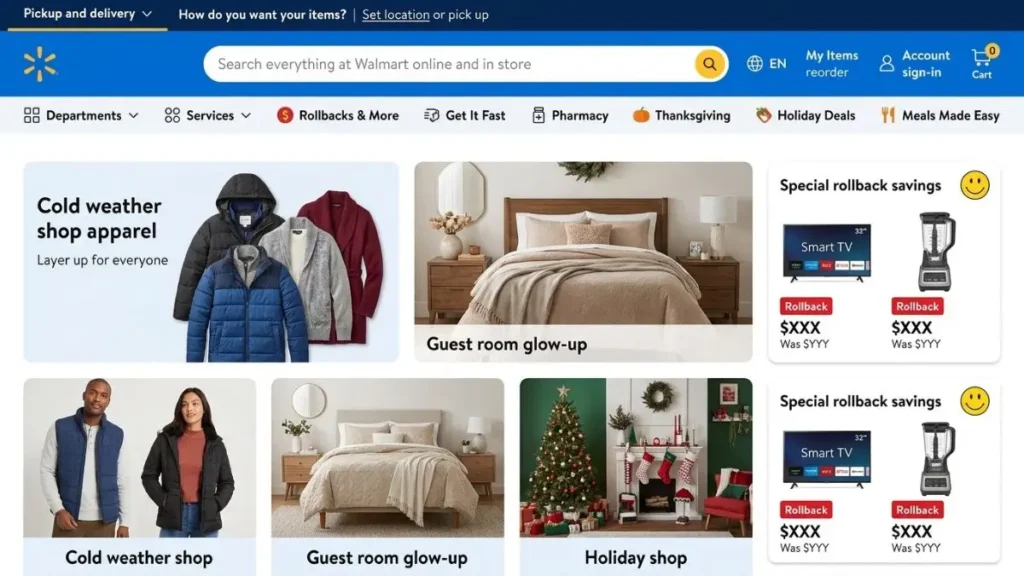
Why Are Businesses Selling on Walmart Marketplace?
Walmart Marketplace offers several advantages for online businesses:
- Access to More Customers: Reach Walmart’s established online shopping audience.
- No Monthly Subscription Fees: Sellers do not pay monthly marketplace membership fees.
- Multiple Fulfillment Options: Manage shipping independently or use Walmart Fulfillment Services.
- Business Expansion: Reach customers through another major online sales channel.
- Advertising Opportunities: Use Walmart Connect to promote eligible products.
For businesses already selling on Amazon, Walmart Marketplace provides an additional sales channel to diversify revenue and reach new customers, highlighting why sell on Walmart.
Benefits of Selling on Walmart Marketplace
- No setup or monthly fees. Walmart’s pricing page states there are no setup, monthly or hidden fees. You pay only when you make a sale.
- Less competition. Because approval is selective, there are fewer sellers than on more open marketplaces, so your products have a better chance of being seen.
- A trusted brand. Shoppers already trust Walmart, and some of that trust carries over to your listings.
- Fast shipping badges. Items fulfilled by Walmart Fulfillment Services (WFS) can carry the two-day shipping tag and free shipping for Walmart+ members, which helps conversion.
- A second sales channel. You can sell on Amazon and Walmart at the same time, which reduces your dependence on one platform.
- New-seller incentives. Walmart runs a New-Seller Savings program for eligible sellers who start selling after February 2, offering up to $75K in value through referral-fee discounts and credits on fulfillment and advertising fees. Check the program page for current terms and eligibility.
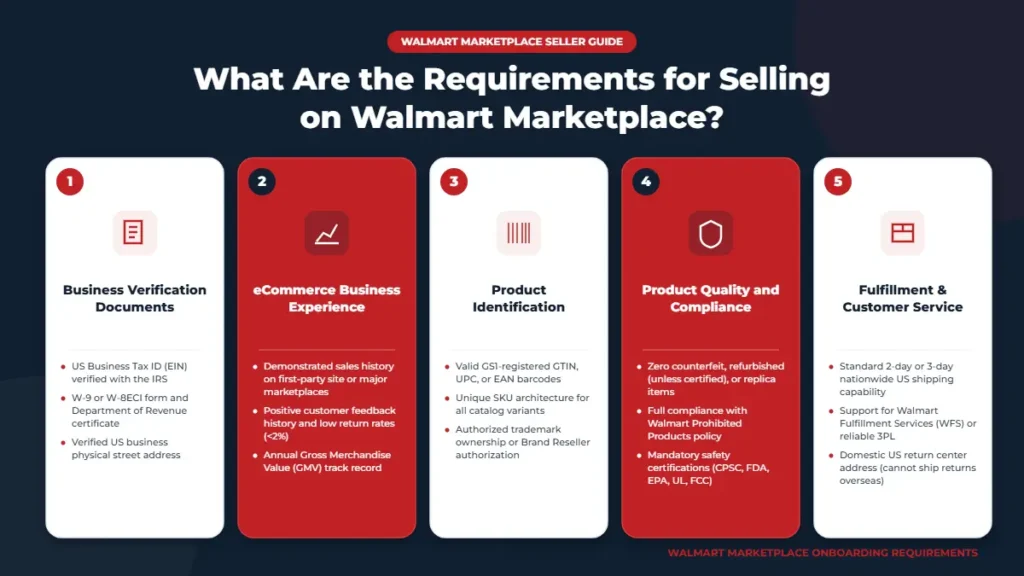
What Are the Requirements for Selling on Walmart Marketplace?
Before creating a seller account, you need to understand Walmart’s eligibility requirements. Walmart reviews applications to ensure sellers can provide authentic products, reliable fulfillment, and satisfactory customer service.
Here are the main requirements you should prepare.
Business Verification Documents
Walmart requires a valid Business Tax ID or Business License Number, along with supporting documents that verify your business name and address.
Your submitted information should match your official business registration records.
eCommerce Business Experience
Walmart generally prefers businesses with an established online selling history.
Experience operating an eCommerce website or selling through marketplaces such as Amazon can help demonstrate your ability to manage products, orders, and customer expectations.
Product Identification
Most products require valid Global Trade Item Numbers (GTINs), such as UPCs, associated with a GS1 Company Prefix.
Some products may qualify for an exemption depending on Walmart’s current product identification requirements.
Product Quality and Compliance
Your products must comply with Walmart’s marketplace policies and applicable regulations.
Counterfeit products, prohibited items, inaccurate product information, and intellectual property violations can lead to listing restrictions or account problems.
Fulfillment and Customer Service Capabilities
You need a reliable fulfillment arrangement that meets Walmart’s shipping, delivery, and returns requirements.
International businesses should also check Walmart’s approved-country list and specific payment and verification requirements before applying.
How to Start Selling on Walmart Marketplace: Step-by-Step
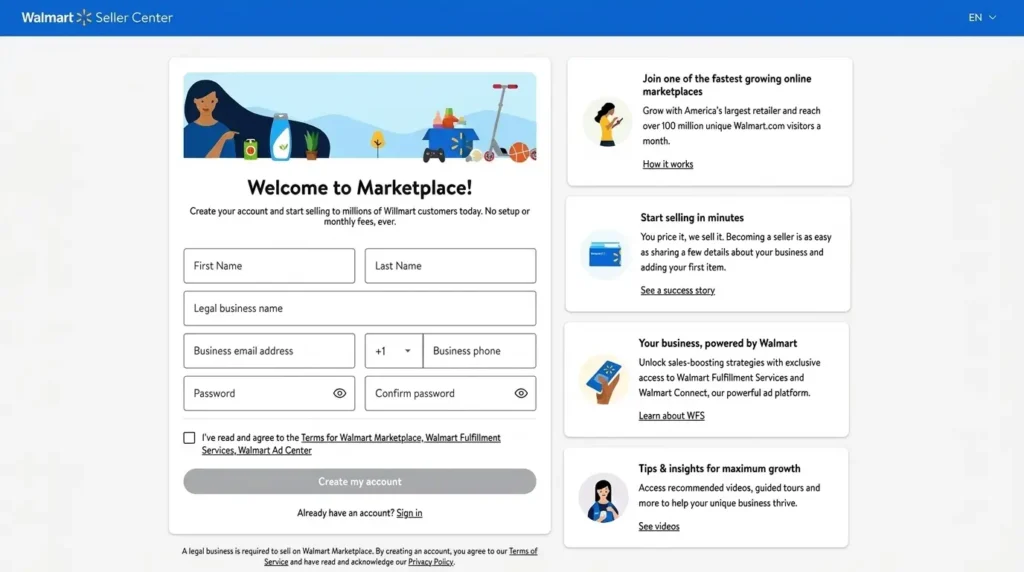
Step 1: Apply and Create Your Seller Center Account
Go to the official Walmart Marketplace registration page and start the application. You will enter your business details, contact information, the product categories you sell and your e-commerce experience. Read the Retailer Agreement carefully and save a copy.
If you want to become Walmart seller quickly, preparation matters more than speed: have your tax ID, address proof and sales history ready before you click Start.
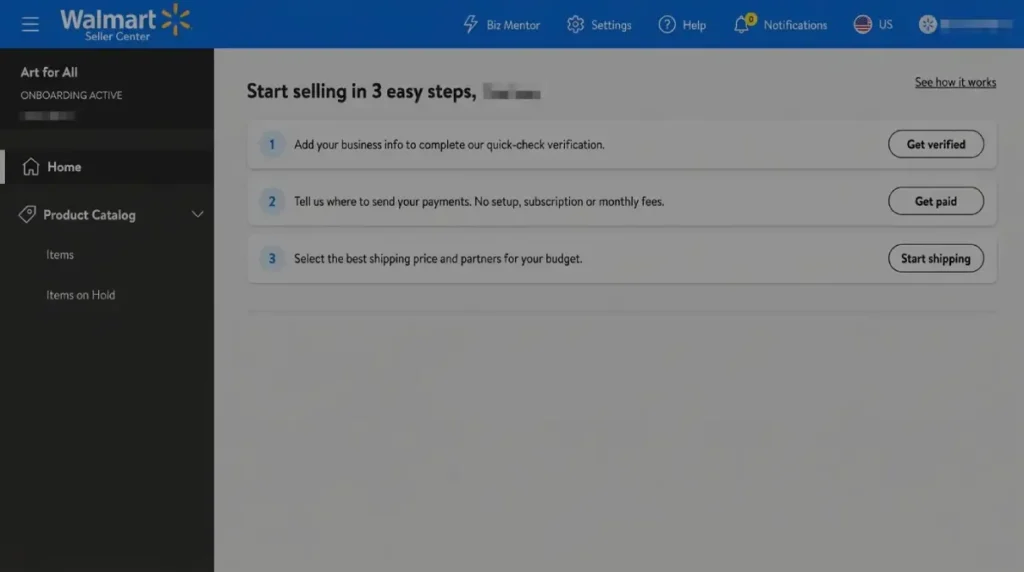
Step 2: Verify Your Business
After you submit, Walmart verifies your business. Timing varies. Walmart’s own guidance suggests onboarding takes around ten days when documents are complete, but it can be faster or take longer if Walmart asks for extra information.
Preparing accurate documentation can improve your Walmart seller approval process and help you avoid unnecessary delays when applying to join the marketplace.
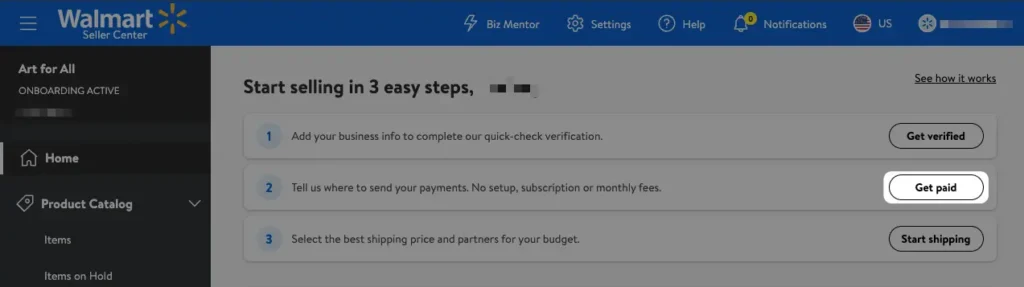
Step 3: Set Up Payments
Walmart pays sellers through third-party payment providers. Depending on your location, options include Walmart’s Marketplace Wallet, Hyperwallet, Payoneer and PingPong. Pick the one that supports your country and bank, then complete the guided setup in Seller Center.
Expect a payment hold on new accounts. Third-party guides report holds of up to about 14 days for US sellers and up to 21 days for international sellers, so plan your cash flow accordingly and confirm the current terms in Seller Center.
Step 4: Set Up Shipping and Returns
In Seller Center, configure your shipping settings: carriers, shipping regions, transit times, fulfillment centers and your return address and policy. Fast, reliable shipping and easy returns directly affect your seller performance and your chances of winning the Buy Box.
You have two main options, covered in the WFS comparison below.
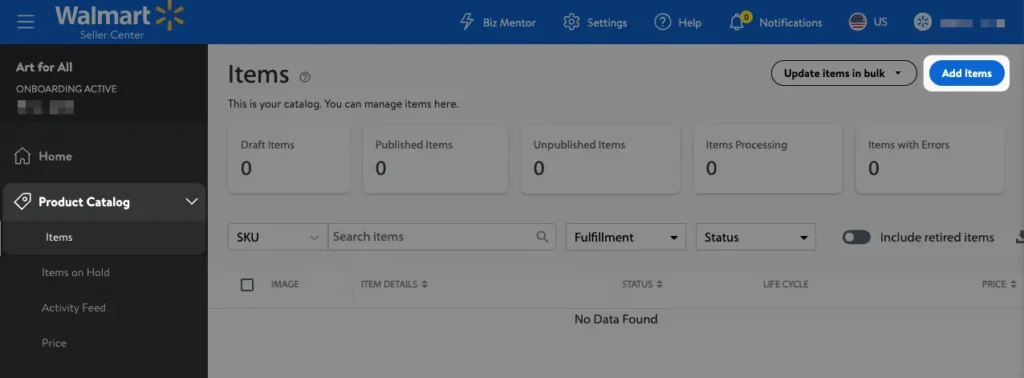
Step 5: List Your Products
There are three ways to add products to your catalog:
- Single item: best for very small catalogs. Search Walmart’s catalog for your item and add your offer, or create a new item if it does not exist.
- Bulk upload: use a spreadsheet to create or update many items at once.
- API or integration: connect your online store or a listing tool so inventory, price and product data sync automatically. This suits larger and fast-changing catalogs. Platforms such as Shopify and BigCommerce have Walmart integrations.
A reliable Walmart listing tool simplifies bulk uploads and helps maintain accurate product information.Make sure every product has a valid GTIN/UPC and the correct category, because the category decides your referral fee and which attributes are required.
Step 6: Optimize Your Listings
A live listing is not a finished listing. Walmart’s search rewards complete, relevant content. Focus on:
- Titles: keep them clear and concise (many sellers aim for roughly 50 to 75 characters), with the brand, product type and the key attribute first. Do not copy your Amazon title word for word.
- Keywords: research how shoppers search and use those terms naturally in your title, description and attributes. Do not stuff keywords.
- Images: use multiple high-quality images on a white background, showing different angles and the product in use.
- Description and bullets: answer common questions, list benefits, and make the text easy to scan.
- Attributes: fill in as many relevant attributes as you can, because they help your product show up in filtered searches.
- Rich content: if you are a brand owner, enhanced content and rich media can improve conversion.
Step 7: Win the Buy Box
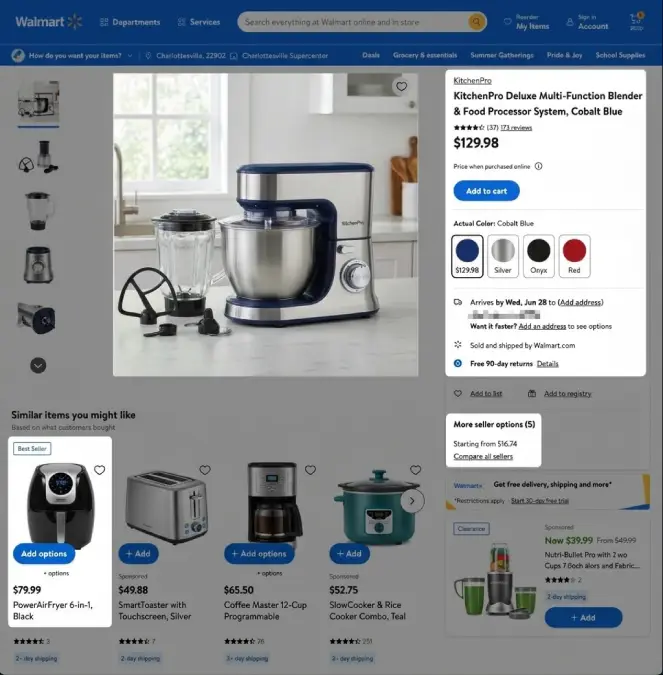
When several sellers offer the same item, Walmart picks one offer to feature by default. That featured spot is the Walmart Buy Box, and most sales go through it. Factors that help include a competitive price (including shipping), fast delivery, in-stock inventory, good seller metrics, and WFS fulfillment. Check your prices regularly, and consider using Walmart repricing tools if you compete with many sellers on the same product.
Once your business meets the eligibility requirements, you can begin the seller registration process.
Follow these steps to establish your Walmart Marketplace account.
How Much Does It Cost to Sell on Walmart Marketplace?
Understanding marketplace fees is essential when calculating your expected profit.
One advantage of selling on Walmart Marketplace is that it does not charge sellers account setup fees or monthly subscription fees.
Instead, Walmart collects referral fees from completed product sales.Walmart charges referral fees on completed sales. Understanding Walmart marketplace seller fees and Walmart selling fees helps sellers calculate potential profits.
Walmart Marketplace Referral Fees
Referral fees depend on the product category and, in some categories, the item’s selling price.
Here are some examples of category rates:
| Product Category | Example Referral Fee |
|---|---|
| Books | 15% |
| Home and Kitchen | 15% |
| Consumer Electronics | 8% |
| Personal Computers | 6% |
| Automotive | 12% |
| Pet Supplies | 15% |
| Toys and Games | 15% |
These are illustrative category rates. Some categories have different fee structures or price-based rates, so always review Walmart’s latest official fee schedule.
Walmart Fulfillment Services Costs
If you use Walmart Fulfillment Services, you may pay additional fees for:
- Inventory storage
- Order picking and packing
- Shipping and fulfillment
- Additional applicable services
The actual cost depends on product weight, dimensions, storage duration, and other fulfillment factors.
Use the official WFS Cost Estimator before sending your inventory to Walmart fulfillment centers.
Example of Walmart Seller Profit Calculation
Suppose you sell a product for $40.
| Expense | Amount |
|---|---|
| Product Cost | $12 |
| Referral Fee (15%) | $6 |
| Fulfillment Cost | $5 |
| Other Expenses | $3 |
| Estimated Profit | $14 |
This example demonstrates why sellers should calculate all expenses before deciding whether a product is profitable.
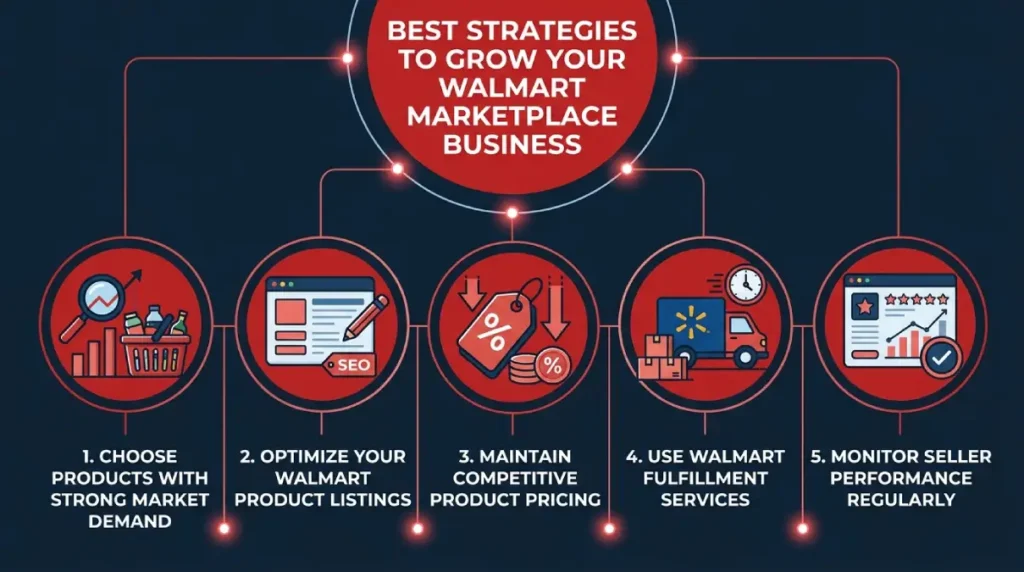
Best Strategies to Grow Your Walmart Marketplace Business
Getting your account approved is only the beginning. Long-term growth requires a strong product strategy, optimized listings, competitive pricing, and reliable order management.
Professional Walmart marketplace management helps businesses improve performance and achieve sustainable growth.
Choose Products With Strong Market Demand
Product research is one of the most important parts of building an online business.
Effective Walmart product research involves identifying products with consistent customer demand, manageable competition, and healthy profit margins.
Some categories worth researching include:
- Home improvement products
- Kitchen accessories
- Beauty and personal care
- Pet supplies
- Outdoor and seasonal products
- Consumer electronics accessories
Evaluate product demand, competitor pricing, customer reviews, and compliance requirements before purchasing inventory.
Optimize Your Walmart Product Listings
Product listing optimization helps customers understand your products and discover them through relevant searches.
Focus on the following elements:
Product Titles: Create descriptive titles containing the product name, brand, and important features.
Product Descriptions: Explain the product’s purpose, benefits, materials, and specifications.
Key Features: Use clear bullet points to highlight important selling points.
Product Images: Upload professional images that display the product from different angles.
Relevant Keywords: Include search terms naturally in appropriate listing fields.
Avoid keyword stuffing and misleading product claims. Accurate information improves the shopping experience and builds customer trust.
Maintain Competitive Product Pricing
Pricing can influence customer purchasing decisions.
Research similar products on Walmart and compare their prices, product quality, shipping options, and customer reviews.
You do not always need to offer the lowest price. Instead, focus on providing good value while maintaining a sustainable profit margin.
Use Walmart Fulfillment Services
Walmart Fulfillment Services allows sellers to store inventory in Walmart fulfillment centers.
Walmart handles several important fulfillment activities, including:
- Product storage
- Order picking
- Packing
- Shipping
- Eligible customer returns
Using WFS can simplify business operations and help eligible products qualify for faster delivery options.
Before selecting this service, compare its fees with your own fulfillment costs.
Monitor Seller Performance Regularly
Strong seller performance is important for maintaining a healthy marketplace account.
Regularly review your:
- Order defect rate
- Cancellation rate
- Shipping performance
- Valid tracking information
- Customer feedback
Maintain accurate inventory and respond to customer concerns promptly.
Walmart Fulfillment Services (WFS) vs Seller Fulfilled
Both options work. The right choice depends on your volume, product size and logistics setup.
| WFS | Seller fulfilled | |
|---|---|---|
| Who ships | Walmart stores, packs and ships | You or your 3PL |
| Delivery promise | Eligible for two-day shipping badge | Depends on your carriers and handling time |
| Returns | Walmart handles returns, including in-store returns | You handle returns |
| Buy Box | Often a stronger advantage | Possible if prices and performance are strong |
| Costs | Fulfillment, storage and related fees | Shipping, packaging, warehouse and labor |
| Control | Less control over handling | Full control |
| Best for | Fast-moving, standard-size products | Custom, oversized, made-to-order or low-volume items |
Many sellers start with seller fulfilled to keep costs low and then move their best sellers to WFS once sales are steady. Check Walmart’s current WFS fee calculator and product eligibility rules before you decide.
What Products Can You Sell?
Most everyday categories are allowed, but Walmart has a Prohibited Products Policy, and some categories (such as fragrances, luxury brands, software, cell phones, seasonal items and jewelry) need pre-approval before you can list. Check the current policy in Seller Center before buying inventory, because selling a prohibited item can get your account suspended.
Does Walmart Allow Dropshipping?
Yes, but with strict rules. You must be the seller of record, the package must not carry another retailer’s branding, and you cannot fill Walmart orders by buying from another marketplace like Amazon and shipping to the customer. Breaking these rules can get your account suspended, so read Walmart’s current dropshipping policy first.
Before starting Walmart dropshipping, understand its seller-of-record and fulfillment requirements.
Walmart Sponsored Search Ads
Once your listings are live and converting, ads can speed up growth. Walmart offers Sponsored Search advertising with two main formats:
- Sponsored Products: promote individual items in search results and on product pages.
- Sponsored Brands: show your logo and products at the top of search results, available to brand owners registered with Walmart Brand Portal.
Start with a small budget, focus on your best-converting products, and review your results weekly.
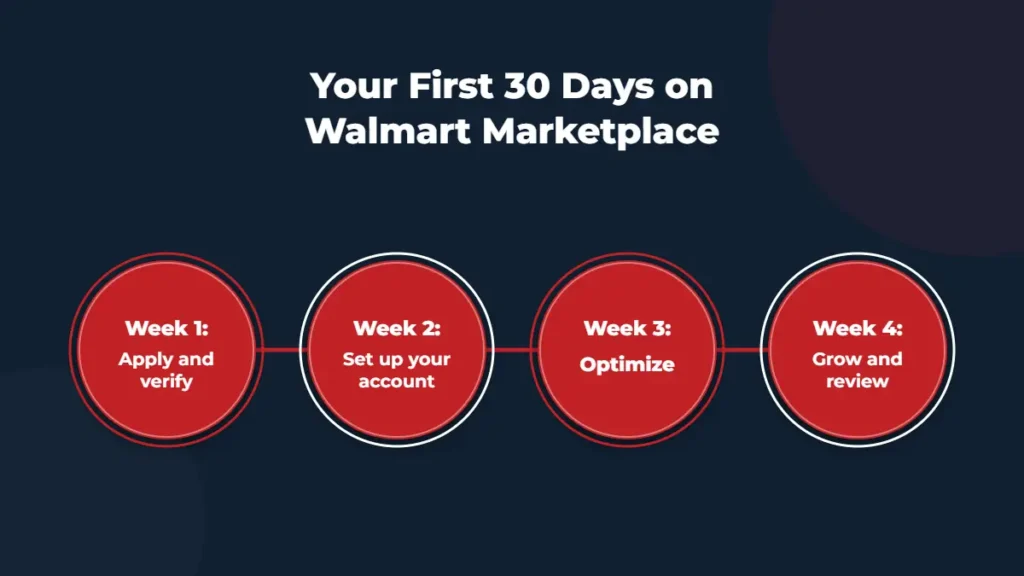
Your First 30 Days on Walmart Marketplace: Checklist
Week 1: Apply and verify
- Collect tax ID, address proof, GTINs and sales history
- Submit the application and respond quickly to any Walmart requests
- Read the Retailer Agreement and seller performance standards
Week 2: Set up your account
- Complete payment setup
- Configure shipping, return address and return policy
- Upload your first products using bulk upload or an integration
Week 3: Optimize
- Improve titles, images, descriptions and attributes
- Check prices against competitors
- Decide whether WFS makes sense for your best sellers
Week 4: Grow and review
- Launch a small Sponsored Products campaign
- Review orders, delivery times and returns
- Check Buy Box ownership and adjust pricing
- Plan your next batch of products
Common Challenges When Selling on Walmart Marketplace
Although Walmart Marketplace provides opportunities for business growth, sellers can encounter operational and competitive challenges.
Understanding these issues can help you avoid common mistakes.
Seller Account Approval Delays
Incomplete documentation, inconsistent business details, or insufficient application information can delay approval.
Solution: Prepare all required documents and carefully review your application before submission.
Product Listing Errors
Missing product attributes, incorrect identifiers, and poor-quality images can prevent listings from publishing successfully.
Solution: Follow Walmart’s item setup guidelines and ensure all product information is accurate.
Inventory Management Issues
Out-of-stock products and delayed shipments can negatively affect customer satisfaction.
Solution: Monitor stock levels regularly and use reliable inventory management software.
High Product Competition
Popular products may have several sellers competing for the same customers.
Solution: Improve listing quality, maintain competitive pricing, and differentiate your products through quality and customer service.
Marketplace Policy Violations
Failure to follow Walmart’s seller policies can lead to listing restrictions or account suspension.
Solution: Review marketplace policies regularly and resolve compliance issues as soon as possible.
Frequently Asked Questions About Selling on Walmart Marketplace
Can anyone sell on Walmart Marketplace?
No, Walmart Marketplace is an invite-or-apply platform rather than an open sign-up site. To get approved, sellers must meet specific eligibility requirements:
- US Business Tax ID (EIN): Individual sellers or casual sellers without a registered business entity are generally not accepted.
- Track Record: Demonstrated e-commerce experience and GTIN/UPC barcode validation for items.
- Order Fulfillment: Capability to manage fast, reliable shipping and customer support directly or through Walmart Fulfillment Services (WFS).
Is it worth it to sell on Walmart Marketplace?
Yes, for established e-commerce brands looking to expand beyond Amazon or Shopify. Key advantages include:
- Lower Competition: Fewer third-party sellers compared to Amazon, resulting in higher visibility for quality catalog listings.
- Massive Audience: Direct access to millions of active monthly visitors on Walmart.com.
- No Fixed Subscription Fees: You only pay when you make a sale, reducing financial overhead during slower periods.
What does it cost to sell on Walmart Marketplace?
- Monthly/Listing Fees: $0. There are no upfront setup fees or monthly account subscription costs.
- Referral Fees: A category-based commission percentage (typically ranging between 6% and 15%) calculated on the total sale price of each item sold.
- Optional Costs: Variable fulfillment and storage fees apply if you choose to utilize Walmart Fulfillment Services (WFS) or run Walmart Connect sponsored ads.
How to get paid from Walmart Marketplace?
- Payment Processors: Walmart integrates with third-party payment processing partners like Payoneer or Hyperwallet to disburse funds via direct bank deposit.
- Payout Schedule: Payments are disbursed bi-weekly (every 14 days) or weekly depending on seller tier and account performance status, deducting applicable referral and fulfillment fees automatically.
Is Selling on Walmart Marketplace Free?
Creating a Walmart Marketplace seller account is free. Walmart does not charge setup or monthly subscription fees. However, sellers pay referral fees on completed sales and may incur fulfillment, storage, and advertising costs.
Can International Sellers Sell on Walmart Marketplace?
Yes, eligible international businesses can apply to sell on Walmart Marketplace. However, they must meet country-specific requirements for business verification, payment arrangements, fulfillment, and documentation.
Do I Need a Business License to Sell on Walmart?
Walmart requires a Business Tax ID or Business License Number as part of its seller application requirements. Supporting documents are also required to verify business information.
Can I Sell on Walmart and Amazon at the Same Time?
Yes. Businesses can sell on both platforms simultaneously. Operating on multiple marketplaces helps diversify revenue and reach different customer audiences.
What Is Walmart Fulfillment Services?
Walmart Fulfillment Services (WFS) is a program that allows sellers to store their products in Walmart fulfillment centers. Walmart handles storage, picking, packing, shipping, and eligible customer returns.
Conclusion: Build a Successful Business by Selling on Walmart Marketplace
Selling on Walmart Marketplace can be an effective way to expand your eCommerce business, reach new customers, and develop additional revenue streams.
However, success requires more than simply creating an account. You need to understand seller requirements, research profitable products, optimize your listings, manage fulfillment, and maintain excellent customer service.
Start by preparing your business documents, evaluating product opportunities, and reviewing Walmart’s marketplace policies. Once your account is approved, focus on building a reliable and customer-friendly selling experience.
Ready to grow your online business? eCommerce Apex can help you with product research, marketplace management, listing optimization, and eCommerce growth strategies. Contact our team today to discover how we can support your Walmart and Amazon selling journey.