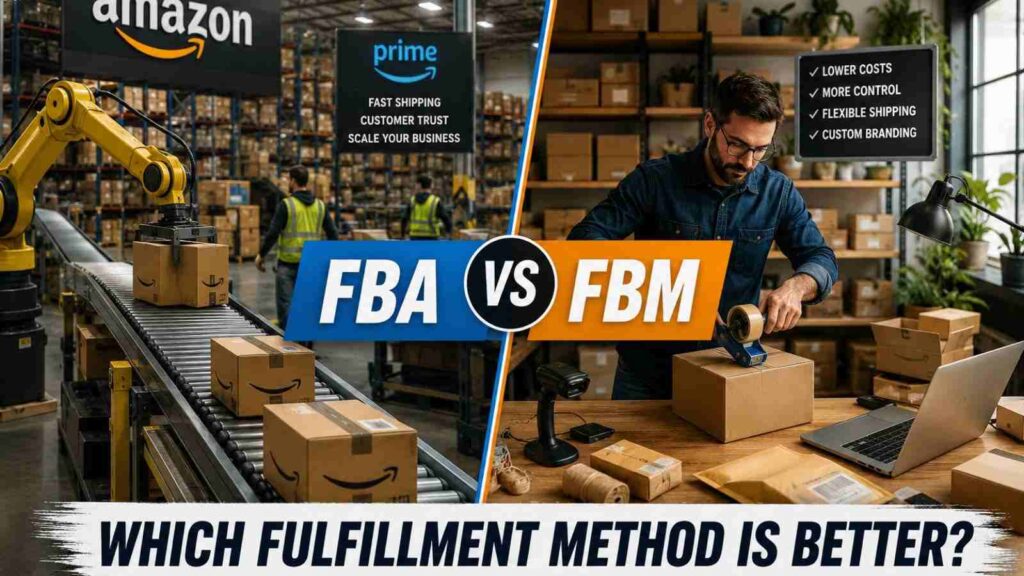
Selling on Amazon has become one of the fastest ways to build an online business. However, one of the biggest decisions every seller faces is choosing the right fulfillment method. Should you let Amazon handle storage, packing, shipping, and customer service, or should you manage everything yourself?
This is where the debate of Amazon FBA vs FBM begins.
Many new sellers choose a fulfillment option without fully understanding how it affects profits, customer satisfaction, inventory management, and long-term growth. The wrong decision can increase costs, create shipping delays, and reduce your chances of winning the Buy Box. On the other hand, the right strategy can improve efficiency, increase sales, and help your business scale faster.
The truth is that there is no one-size-fits-all answer. The best choice depends on your product type, budget, business goals, storage capacity, and order volume.
In this complete guide, you’ll learn:
- What Amazon FBA is and how it works
- What Amazon FBM is and when it makes sense
- The difference between Amazon FBA and FBM
- Amazon FBA fees vs Amazon FBM fees
- Which fulfillment method is more profitable
- When to use a hybrid FBA + FBM strategy
- How to choose the best option for your business in 2026
Whether you’re launching your first private label product or already running an established Amazon business, this guide will help you make a confident, data-driven decision.

Both FBA and FBM are fulfillment methods available to sellers who operate through the Amazon Marketplace. Understanding the marketplace helps you see where these models fit into the selling process.
What Is Amazon FBA?
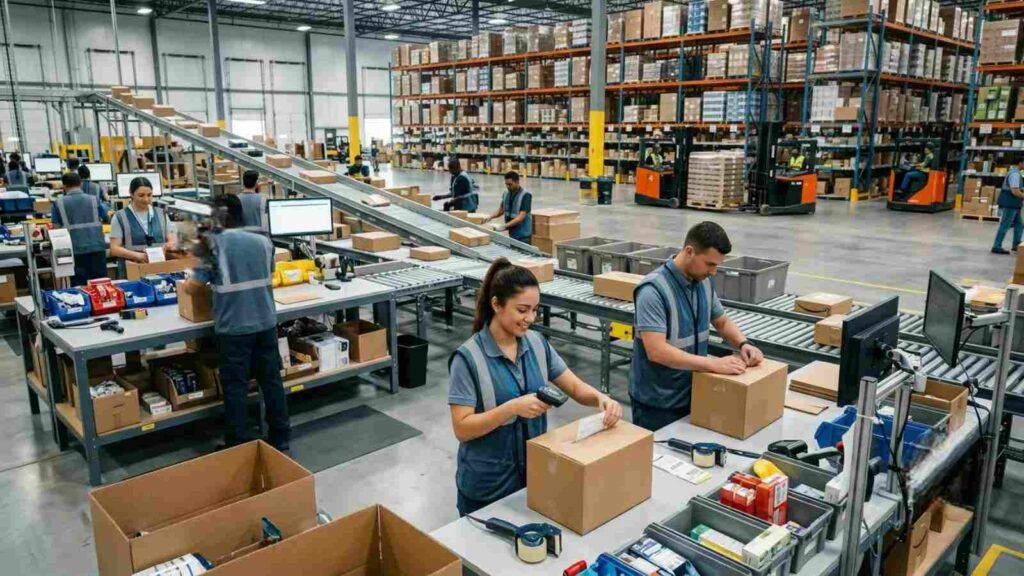
Amazon FBA (Fulfillment by Amazon) is a service where Amazon stores your inventory in its fulfillment centers and manages almost the entire order fulfillment process on your behalf.
Instead of storing products in your own warehouse, you ship your inventory to Amazon. When a customer places an order, Amazon picks, packs, ships, and delivers the product. Amazon also handles customer service, returns, and refunds.
In simple terms:
You sell the product. Amazon fulfills the order.
This is one of the reasons why Amazon FBA has become the preferred choice for many businesses looking to scale quickly without building their own logistics network.
How Amazon FBA Works
The process is straightforward:
- Create your product listing.
- Prepare and label your inventory.
- Send products to Amazon fulfillment centers.
- Amazon stores your inventory.
- Customers place orders.
- Amazon picks, packs, and ships the products.
- Amazon manages returns and customer support.
This automation allows sellers to spend more time on product research, marketing, sourcing, and business growth instead of daily shipping tasks.
Benefits of Amazon FBA
Prime Eligibility
Products fulfilled through Amazon automatically qualify for Prime shipping, making them more attractive to millions of Prime members.
Faster Shipping
Amazon’s extensive fulfillment network enables same-day, one-day, and two-day delivery in many regions.
Better Buy Box Opportunities
Although multiple factors determine Buy Box eligibility, FBA listings often perform better because of faster delivery and higher customer trust.
Time Savings
Amazon manages storage, packing, shipping, customer support, and returns, reducing operational workload significantly.
Easier Business Scaling
As order volume increases, Amazon continues handling fulfillment without requiring you to hire additional warehouse staff.
Challenges of Amazon FBA
While Amazon FBA offers many advantages, sellers should also understand its limitations.
- Higher storage fees for slow-moving inventory
- Long-term storage charges
- Less control over packaging
- Inventory planning becomes critical
- Removal and disposal fees may apply
For businesses with low-margin or oversized products, these costs can reduce profitability if inventory isn’t managed efficiently.
Amazon FBA Is Best For
Amazon FBA is usually the better choice for:
- Private label brands
- Wholesale sellers
- High-volume businesses
- Small and lightweight products
- Sellers targeting Prime customers
- Businesses planning to scale quickly
If your goal is automation and long-term growth, Amazon FBA often provides the infrastructure needed to expand without increasing operational complexity.
What Is Amazon FBM?

Amazon FBM (Fulfilled by Merchant) means the seller is responsible for every step of the fulfillment process after a customer places an order.
Unlike FBA, Amazon only provides the marketplace where your products are listed. Everything else—including storage, packaging, shipping, tracking, customer service, and returns—is managed by you or your fulfillment partner.
Simply put:
You sell the product, and you also fulfill the order yourself.
Many experienced sellers choose Amazon FBM because it gives them greater control over operations and can significantly reduce fulfillment costs for certain product categories.
How Amazon FBM Works
Here’s the typical workflow:
- Create your Amazon listing.
- Store products in your own warehouse or facility.
- Receive customer orders through Amazon.
- Pack each order.
- Ship directly to the customer.
- Handle tracking updates.
- Manage customer service and returns.
This method requires more involvement but offers complete control over inventory and logistics.
Benefits of Amazon FBM
Lower Storage Costs
You don’t pay Amazon warehouse storage fees, making FBM attractive for businesses with existing storage facilities.
Greater Control
You control packaging, branding, shipping methods, and inventory management, which can create a better customer experience.
Better for Oversized Products
Large, heavy, or slow-moving products often incur high FBA storage and fulfillment fees. FBM may be more cost-effective in these cases.
Flexible Inventory Management
You’re not required to send inventory to Amazon warehouses, reducing the risk of overstocking.
Easier Multi-Channel Fulfillment
If you also sell through Shopify, WooCommerce, Walmart, or your own website, managing inventory from one location becomes much simpler.
Challenges of Amazon FBM
Managing fulfillment yourself also comes with responsibilities.
- Daily order processing
- Shipping deadlines
- Customer support
- Return management
- Warehouse organization
- Carrier coordination
Missing shipping deadlines or providing poor customer service can negatively affect your Amazon seller metrics and account health.
Amazon FBM Is Best For
FBM is often the right choice for:
- Handmade product sellers
- Custom or made-to-order businesses
- Large or heavy products
- Low-volume sellers
- Businesses with existing warehouses
- Multi-channel eCommerce brands
If you already have reliable shipping operations or want complete control over your fulfillment process, Amazon FBM can be a profitable option.
What is the difference between Amazon FBA and FBM?
The main difference between Amazon FBA vs FBM is who handles order fulfillment. With Amazon FBA, Amazon stores inventory, packs orders, ships products, manages customer service, and processes returns. With Amazon FBM, the seller is responsible for storing inventory, packing orders, shipping products, handling customer service, and managing returns. FBA offers convenience and scalability, while FBM provides greater control and flexibility.
Amazon FBA vs FBM Comparison: What’s the Real Difference?
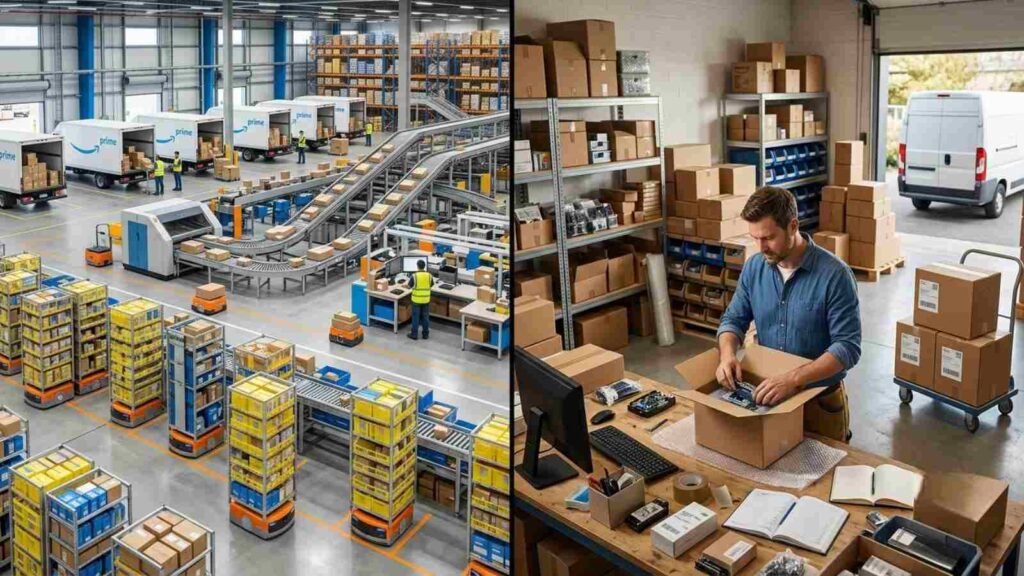
At first glance, both fulfillment methods allow you to sell products on Amazon. However, the way orders are processed, shipped, and managed is completely different. Understanding these differences is essential because your fulfillment strategy directly impacts your costs, customer satisfaction, business growth, and overall profitability.
If you’re wondering “Amazon FBA or FBM—which is right for me?”, the comparison below provides a quick overview before we dive deeper into each factor.
| Feature | Amazon FBA | Amazon FBM |
|---|---|---|
| Inventory Storage | Amazon Fulfillment Centers | Seller’s Warehouse or Third-Party Warehouse |
| Packing & Shipping | Amazon | Seller |
| Customer Service | Amazon | Seller |
| Returns Handling | Amazon | Seller |
| Prime Eligibility | Yes | Only through Seller Fulfilled Prime (if eligible) |
| Shipping Speed | Very Fast | Depends on Seller |
| Business Control | Moderate | Complete |
| Startup Cost | Higher | Lower |
| Scalability | Excellent | Depends on Your Operations |
| Best For | High-volume sellers | Low-volume or specialized products |
Although both methods help you reach millions of Amazon customers, they serve different business models.
Difference Between Amazon FBA and FBM
Let’s explore the most important differences in detail.
1. Inventory Storage
One of the biggest differences between Amazon FBA vs FBM is where your inventory is stored.
With Amazon FBA, your products are shipped to Amazon’s fulfillment centers. Amazon stores your inventory until a customer places an order.
With Amazon FBM, inventory stays in your own warehouse, office, home, or with a third-party logistics (3PL) provider.
Which Is Better?
- Choose FBA if you don’t have storage space.
- Choose FBM if you already own warehouse facilities or work with a fulfillment partner.
2. Order Fulfillment Process
The fulfillment process determines how quickly customers receive their orders.
Amazon FBA
Amazon employees:
- Pick products
- Pack orders
- Print shipping labels
- Ship packages
- Provide tracking information
Everything happens automatically.
Amazon FBM
You or your warehouse team must:
- Receive order notifications
- Pick products
- Pack securely
- Arrange shipping
- Upload tracking
- Ensure on-time delivery
This requires significantly more operational effort.
3. Customer Service & Returns
Customer support is another major deciding factor.
Amazon FBA
Amazon handles:
- Customer inquiries
- Refund requests
- Product returns
- Delivery issues
This saves sellers countless hours every week.
Amazon FBM
The seller is responsible for:
- Responding to customer messages
- Processing returns
- Issuing refunds
- Resolving complaints
If you receive a high number of daily orders, this can become time-consuming without a dedicated support team.
4. Prime Eligibility
Prime shipping plays a significant role in increasing conversion rates.
Products fulfilled through Amazon FBA automatically receive the Prime badge, making them more appealing to shoppers who expect fast and reliable delivery.
FBM products are generally not Prime-eligible unless the seller qualifies for Amazon’s Seller Fulfilled Prime (SFP) program, which has strict performance requirements.
For most new sellers, FBA offers an easier path to reaching Prime customers.
5. Shipping Speed
Fast delivery has become one of the most important ranking and conversion factors on Amazon.
Amazon FBA
Amazon’s logistics network enables:
- Same-day delivery (where available)
- One-day shipping
- Two-day Prime shipping
Amazon FBM
Shipping speed depends entirely on:
- Your warehouse efficiency
- Courier services
- Inventory location
- Order processing time
Customers are more likely to choose listings that promise faster delivery.
6. Business Control
Control is one area where FBM has a clear advantage.
With FBM, you decide:
- Packaging design
- Branding
- Inserts
- Shipping carriers
- Delivery methods
- Inventory organization
FBA provides convenience, but sellers have less control because Amazon manages most fulfillment activities.
If branding and packaging are essential to your customer experience, FBM may be a better fit.
7. Costs and Profit Margins
Many new sellers assume FBA is always more expensive, but that’s not necessarily true.
Amazon FBA includes fees for:
- Storage
- Fulfillment
- Returns
- Long-term inventory
Amazon FBM eliminates many of these fees but introduces other expenses such as:
- Warehouse rent
- Staff salaries
- Packaging materials
- Shipping costs
- Customer support
The more orders you process, the more important it becomes to calculate your actual profit rather than focusing on a single fee.
We’ll compare Amazon FBA fees vs Amazon FBM fees in detail in the next section.
8. Scalability
If your goal is to grow from 20 orders per day to 2,000 orders per day, fulfillment becomes a critical challenge.
Amazon FBA makes scaling easier because Amazon automatically handles increasing order volumes.
With FBM, you’ll need:
- More warehouse space
- Additional staff
- Better inventory software
- Improved logistics
Businesses planning rapid expansion often find FBA to be the more scalable option.
9. Inventory Management
Inventory management differs significantly between the two fulfillment methods.
Amazon FBA
You must carefully forecast inventory and replenish stock before it runs out at Amazon’s fulfillment centers.
Running out of inventory can negatively affect your rankings and sales.
Amazon FBM
You have direct access to your inventory at all times, making it easier to update stock levels and adjust quickly to demand.
10. Best Products for Each Fulfillment Method
Amazon FBA Works Best For
- Small and lightweight products
- Fast-selling inventory
- Private label brands
- Wholesale products
- High-demand consumer goods
- Businesses focused on automation
Amazon FBM Works Best For
- Furniture
- Industrial equipment
- Handmade products
- Customized items
- Oversized products
- Seasonal inventory
- Low-volume niche products
Choosing the right fulfillment method often depends more on the product itself than on the seller.
Amazon FBA vs FBM: Side-by-Side Summary
Here’s a quick recap to help you compare both fulfillment methods.
Choose Amazon FBA if you:
- Want Amazon to manage shipping and customer service
- Need automatic Prime eligibility
- Plan to scale quickly
- Sell lightweight, fast-moving products
- Prefer automation over manual operations
Choose Amazon FBM if you:
- Already have warehouse space
- Want complete operational control
- Sell oversized or customized products
- Need branded packaging
- Operate across multiple sales channels
There is no universal winner in the Amazon FBA vs FBM comparison. The better choice depends on your products, budget, logistics capabilities, and long-term business goals.
In fact, many successful Amazon sellers eventually combine both fulfillment methods to maximize profitability and flexibility—a strategy we’ll explore later in this guide.
If you’re considering the FBA model, wholesale is one of the most popular ways to grow your business. Our What Is Amazon Wholesale FBA? guide explains how wholesale sourcing works, its benefits, and how to get started.
Amazon FBA Fees vs Amazon FBM Fees: Which Costs Less?

One of the biggest factors when choosing between Amazon FBA vs FBM is the total cost of fulfilling orders. Many new sellers focus only on Amazon’s visible fees, but the real cost includes storage, shipping, labor, packaging, returns, and time.
A fulfillment method that looks cheaper at first may become more expensive as your business grows. That’s why it’s important to calculate the total cost of ownership, not just individual fees.
The good news is that both fulfillment methods can be profitable when matched with the right products and business model.
Amazon FBA Fees Explained
When using Amazon FBA (Fulfillment by Amazon), you pay Amazon to store and fulfill your products. These charges vary depending on product size, weight, seasonality, and storage duration.
The most common Amazon FBA fees include:
1. Fulfillment Fees
This fee covers:
- Picking the item from the warehouse
- Packing the order
- Shipping to the customer
- Standard customer service
- Basic return processing
The fee depends on the product’s dimensions and shipping weight.
2. Monthly Storage Fees
Amazon charges a monthly fee for storing your inventory in its fulfillment centers.
Your storage cost depends on:
- Product size
- Storage volume
- Time of year
- Inventory occupied
Storage fees generally increase during the holiday season because warehouse demand is much higher.
3. Long-Term Storage Fees
Inventory that remains unsold for an extended period may incur additional long-term storage charges.
This is one of the biggest reasons experienced sellers monitor inventory carefully and avoid sending excessive stock to Amazon.
4. Removal and Disposal Fees
If you want Amazon to return unsold inventory or dispose of it, additional charges apply.
Many sellers use these services when discontinuing products or clearing slow-moving inventory.
Amazon FBM Fees Explained
Unlike FBA, Amazon FBM (Fulfilled by Merchant) does not charge fulfillment or storage fees because you manage logistics yourself.
However, FBM comes with its own operating costs.
Common Amazon FBM Costs
- Warehouse or storage rent
- Packaging materials
- Shipping labels
- Courier charges
- Employee wages
- Inventory software
- Customer support
- Return handling
While Amazon doesn’t charge fulfillment fees, these business expenses should always be included when calculating profit margins.
Amazon FBA vs FBM Cost Comparison
The table below highlights the key cost differences between both fulfillment methods.
| Expense | Amazon FBA | Amazon FBM |
|---|---|---|
| Storage | Amazon Fulfillment Centers | Your Warehouse |
| Packing | Included | Seller Pays |
| Shipping | Included in Fulfillment Fee | Seller Pays |
| Customer Support | Amazon | Seller |
| Returns | Amazon | Seller |
| Warehouse Staff | Not Required | Required as You Grow |
| Packaging Materials | Included | Seller Pays |
| Prime Shipping | Included | Limited Availability |
At first glance, FBM may appear less expensive because Amazon charges fewer fees. However, once labor, warehouse management, and shipping costs are included, the difference often becomes much smaller.
For many growing businesses, Amazon FBA actually saves money by reducing operational overhead and improving efficiency.
Which Fulfillment Method Is More Profitable?
There is no universal answer.
Profitability depends on several factors, including:
- Product size
- Product weight
- Sales volume
- Profit margins
- Shipping costs
- Return rates
- Inventory turnover
Let’s look at a few practical examples.
Scenario 1: Small Lightweight Product
Example:
A phone stand weighing less than 300 grams.
Best Option
✅ Amazon FBA
Why?
- Low fulfillment cost
- Prime eligibility
- Fast shipping
- High conversion rates
- Minimal storage fees
Products like these typically perform exceptionally well with Amazon FBA.
Scenario 2: Large Heavy Product
Example:
Office chair.
Best Option
✅ Amazon FBM
Why?
- High Amazon fulfillment fees
- Higher warehouse storage charges
- Expensive return shipping
Managing fulfillment independently often produces better profit margins for oversized items.
Scenario 3: Handmade Products
Example:
Customized gifts.
Best Option
✅ Amazon FBM
Each order requires customization before shipping.
Sending inventory to Amazon beforehand is often impractical because every product is made after purchase.
Scenario 4: High-Volume Private Label Brand
Example:
Kitchen accessories selling hundreds of units every month.
Best Option
✅ Amazon FBA
Amazon’s automated fulfillment allows sellers to focus on:
- Product sourcing
- PPC campaigns
- Listing optimization
- Brand growth
instead of spending hours packing orders every day.
Pros and Cons of Amazon FBA
Understanding both the advantages and disadvantages will help you choose the right fulfillment strategy.
Pros of Amazon FBA
Faster Shipping
Amazon’s nationwide fulfillment network delivers products quickly, improving customer satisfaction.
Prime Badge
Prime eligibility often increases click-through rates and conversions because shoppers trust Prime delivery.
Easy Scaling
Whether you receive 20 orders or 2,000 orders per day, Amazon handles the fulfillment process.
Time Savings
Instead of packing boxes every day, you can focus on growing your business.
Better Customer Experience
Amazon manages customer service and returns professionally, helping maintain strong seller performance metrics.
Cons of Amazon FBA
Higher Fees
Storage and fulfillment costs can reduce profit margins, especially for oversized or low-margin products.
Less Branding Control
Amazon packaging limits your ability to create a fully customized unboxing experience.
Inventory Planning
Poor forecasting can lead to stockouts or long-term storage fees.
Storage Limits
Amazon may restrict inventory capacity during peak seasons, making careful planning essential.
Pros and Cons of Amazon FBM
Amazon FBM offers flexibility and control, but it also requires more hands-on management.
Pros of Amazon FBM
- Greater control over inventory
- Custom packaging and branding
- Lower storage costs if you already own warehouse space
- Better for oversized products
- Easier inventory sharing across multiple sales channels
Cons of Amazon FBM
- Daily shipping responsibilities
- Customer service management
- Return handling
- Slower delivery if logistics aren’t optimized
- More operational work as order volume increases
For businesses without an efficient fulfillment process, these responsibilities can quickly become overwhelming.
Featured Snippet: Is Amazon FBA Cheaper Than FBM?
Not always. Amazon FBA includes storage and fulfillment fees, while Amazon FBM requires sellers to pay for their own warehousing, packaging, labor, shipping, and customer service. FBA is often more cost-effective for lightweight, fast-selling products, whereas FBM can be more profitable for oversized, heavy, customized, or low-volume items.
Which Is Better Amazon FBA or FBM?

After comparing the features, costs, and benefits of both fulfillment methods, one question remains:
Which is better—Amazon FBA or FBM?
The answer depends on your business model, budget, product type, and long-term goals. There isn’t a single fulfillment method that works for every seller. Instead, the right choice depends on what you’re selling and how you want to grow your business.
Choose Amazon FBA If You:
- Want to automate order fulfillment.
- Plan to scale your Amazon business quickly.
- Sell lightweight and fast-moving products.
- Want automatic Prime eligibility.
- Don’t have your own warehouse or fulfillment team.
- Prefer spending time on product research, branding, and marketing instead of daily shipping.
Best for:
- Private Label Sellers
- Wholesale Businesses
- Online Arbitrage Sellers
- High-Volume Amazon Stores
Choose Amazon FBM If You:
- Already own warehouse space.
- Sell oversized or heavy products.
- Offer customized or handmade items.
- Want complete control over packaging and branding.
- Sell through multiple platforms such as Shopify, Walmart, or your own website.
- Want to avoid Amazon storage fees.
Best for:
- Handmade Brands
- Furniture Sellers
- Industrial Products
- Custom Manufacturing Businesses
- Low-Volume Niche Stores
Amazon FBA + FBM Hybrid Model Benefits and Setup

Many successful Amazon sellers don’t limit themselves to one fulfillment method. Instead, they combine both FBA and FBM to maximize flexibility and profitability.
This strategy is known as the Amazon FBA-FBM Hybrid Model.
How the Hybrid Model Works
Instead of relying entirely on one fulfillment option:
- Fast-selling products are sent to Amazon FBA.
- Slow-moving or oversized products are fulfilled through FBM.
- Backup inventory remains available through FBM if FBA stock runs out.
This approach helps sellers reduce storage costs while maintaining consistent product availability.
Benefits of the Hybrid Model
Reduce Stockout Risk
If your FBA inventory sells out, your FBM listing can continue fulfilling customer orders, helping you avoid lost sales.
Better Inventory Management
High-demand products can stay in Amazon warehouses, while slower-moving inventory remains under your control.
Lower Overall Costs
Oversized or seasonal products don’t need to occupy expensive FBA storage space year-round.
More Flexibility
You can quickly adjust your fulfillment strategy based on demand, shipping costs, and seasonal trends.
Business Continuity
Unexpected delays, inventory restrictions, or supply chain issues won’t completely stop your sales because you have an alternative fulfillment method.
For growing brands, a hybrid model often provides the best balance between automation and operational control.
What Is FBM on Amazon?
FBM (Fulfilled by Merchant) is an Amazon fulfillment method where the seller stores inventory, packs orders, ships products, manages customer service, and processes returns instead of Amazon.
In simple words:
You sell the product and handle the entire fulfillment process yourself.
FBM is commonly chosen by sellers who already have warehousing capabilities or who sell products that are not ideal for Amazon FBA.
How to Do FBM on Amazon
Getting started with FBM is relatively straightforward.
Step 1: Create an Amazon Seller Account
Choose either an Individual or Professional Seller account depending on your expected sales volume.
Step 2: List Your Products
Create optimized product listings with high-quality images, keyword-rich titles, compelling bullet points, and informative descriptions.
Step 3: Select FBM as the Fulfillment Method
When creating your listing, choose Fulfilled by Merchant instead of Fulfilled by Amazon.
Step 4: Store Your Inventory
Keep products in your own warehouse, office, home, or a trusted third-party logistics (3PL) facility.
Step 5: Ship Orders Promptly
Once an order is received:
- Pack the product securely.
- Print shipping labels.
- Dispatch the order.
- Upload tracking information.
- Deliver within Amazon’s required shipping time.
Step 6: Provide Excellent Customer Service
Respond quickly to customer messages, process returns efficiently, and maintain strong seller performance metrics.
A well-managed FBM operation can perform just as successfully as FBA when shipping is reliable and customer service is excellent.
Amazon Seller Fulfilled Prime (SFP) and Third-Party Fulfillment
Some sellers want Prime eligibility without using Amazon warehouses.
This is where Seller Fulfilled Prime (SFP) comes in.
Under the SFP program, eligible sellers can display the Prime badge while fulfilling orders from their own warehouse. However, Amazon requires strict shipping performance, on-time delivery, and customer service standards.
Another option is using a Third-Party Fulfillment (3PL) provider.
A 3PL company stores your inventory and fulfills orders on your behalf. This can reduce operational workload while giving you more flexibility than traditional FBA.
This approach is often beneficial for businesses selling through multiple channels, including Shopify, WooCommerce, Walmart Marketplace, and their own eCommerce websites.
Decision Matrix: Which Fulfillment Method Fits Your Business?
| Business Type | Recommended Fulfillment Method |
|---|---|
| New Amazon Seller | Amazon FBA |
| Private Label Brand | Amazon FBA |
| Wholesale Business | Amazon FBA |
| Handmade Products | Amazon FBM |
| Customized Products | Amazon FBM |
| Heavy or Oversized Products | Amazon FBM |
| Seasonal Products | Amazon FBM |
| Multi-Channel Business | Hybrid (FBA + FBM) |
| Fast-Growing Brand | Hybrid (FBA + FBM) |
Frequently Asked Questions
Is Amazon FBA better than FBM?
Amazon FBA is generally better for sellers who want automation, Prime eligibility, and faster scaling. Amazon FBM is more suitable for businesses that require greater operational control or sell oversized, customized, or low-volume products.
Can I use both Amazon FBA and FBM?
Yes. Many experienced sellers use both fulfillment methods. This hybrid approach allows businesses to optimize costs, improve inventory management, and reduce the risk of stockouts.
Which fulfillment method is more profitable?
Profitability depends on product size, shipping costs, inventory turnover, and operational expenses. Lightweight, high-volume products often perform better with FBA, while oversized or customized products are usually more profitable with FBM.
Is Amazon FBM good for beginners?
Yes, especially if you already have storage space and can manage shipping efficiently. However, beginners who prefer automation often find Amazon FBA easier to manage.
Can I switch from FBM to FBA later?
Absolutely. Many sellers begin with FBM to test product demand and later transition to FBA once sales increase and inventory becomes more predictable.
Final Verdict
Choosing between Amazon FBA vs FBM is one of the most important decisions you’ll make as an Amazon seller. Both fulfillment methods offer unique advantages, and the right choice depends on your products, operational capabilities, and growth strategy.
If your priority is convenience, automation, Prime eligibility, and rapid scaling, Amazon FBA is an excellent option. On the other hand, if you value complete control, lower storage costs, and flexibility for oversized or customized products, Amazon FBM may be the better fit.
For many growing businesses, the smartest long-term strategy is a hybrid FBA + FBM model, combining the strengths of both fulfillment methods to maximize efficiency and profitability.
The key is to evaluate your business regularly, monitor fulfillment costs, and adapt your strategy as your store grows.

Ready to Grow Your Amazon Business?
Selecting the right fulfillment strategy is only the first step. Long-term success on Amazon also depends on product research, listing optimization, inventory management, advertising, and account performance.
If you’re looking to build a profitable and scalable Amazon business, the team at eCommerce Apex can help you with:
- Amazon Account Management
- Amazon PPC Management
- Product Listing Optimization
- Keyword Research
- Inventory Planning
- Marketplace Strategy
- Brand Growth Solutions
Whether you’re launching your first product or expanding an established brand, choosing the right fulfillment strategy today can create a stronger, more profitable business tomorrow.