
Selling on Amazon has become one of the easiest ways to start an online business without building your own eCommerce store from scratch. With millions of customers visiting Amazon every day, even beginners have the opportunity to reach buyers across the world.
Whether you want to create a side income, launch a private-label brand, or build a full-time eCommerce business, Amazon provides the tools and marketplace to make it possible. However, many new sellers don’t know where to begin. Questions like How do I create an Amazon seller account?, What products should I sell?, and How much money do I need to start? are common.
This guide answers those questions step by step. You’ll learn how to start selling on Amazon in 2026, avoid common beginner mistakes, and understand the strategies successful sellers use to grow profitable businesses.
By the end of this guide, you’ll have a clear roadmap—from creating your seller account to listing products and making your first sale.
After setting up your Amazon business, understanding how Amazon PPC works can help you generate targeted traffic and increase product visibility.
Quick Answer How to Sell on Amazon?
If you’re looking for the short answer, here’s the process:
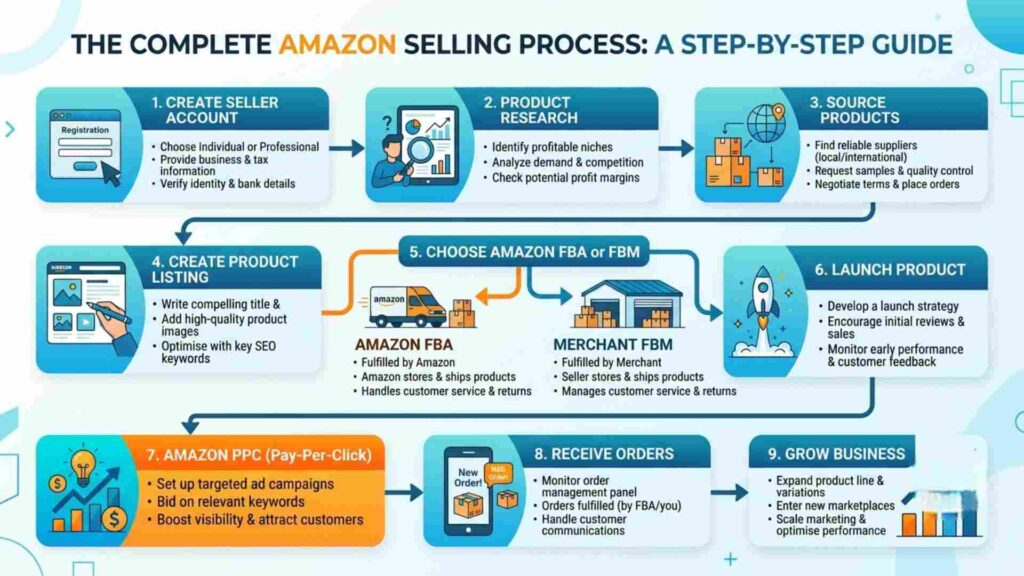
- Create an Amazon Seller account.
- Choose an Individual or Professional selling plan.
- Research a profitable product.
- Source your inventory from reliable suppliers.
- Create an optimized product listing.
- Select Fulfillment by Amazon (FBA) or Fulfillment by Merchant (FBM).
- Launch your product and drive sales using Amazon SEO and advertising.
- Optimize your business as it grows.
Each of these steps is explained in detail throughout this guide.
Why Sell on Amazon in 2026?
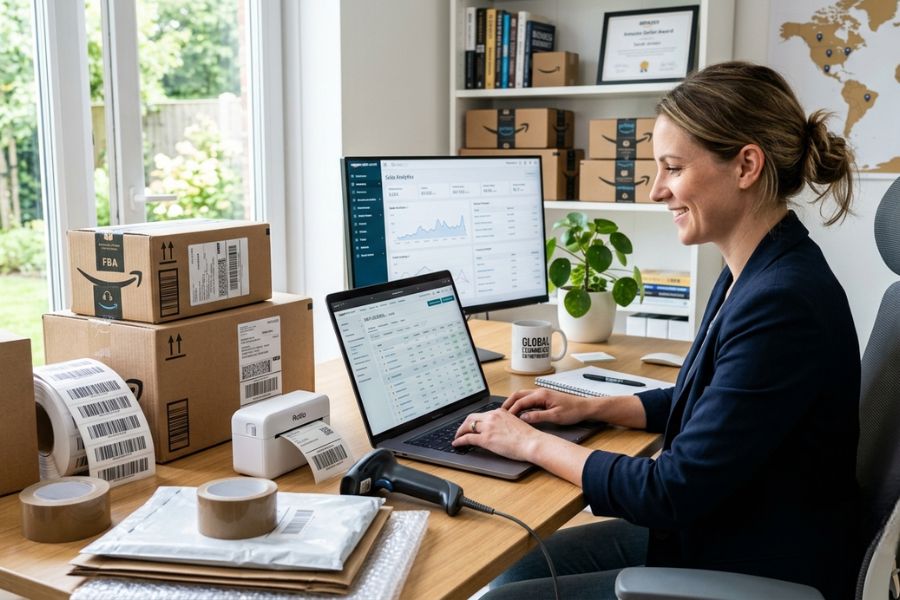
Amazon continues to be one of the world’s largest online marketplaces, attracting hundreds of millions of active shoppers every month. Instead of spending years building traffic to a new website, sellers can immediately reach customers who are already searching for products.
Here are some of the biggest reasons entrepreneurs choose Amazon.
Amazon connects millions of buyers with businesses of every size through its global marketplace. If you’d like to understand how this ecosystem works and why it’s such a powerful platform for online sellers, check out our What Is Amazon Marketplace? guide.
Massive Customer Base
Amazon already has a global audience actively looking for products. This means you don’t have to convince people to visit your website first. Your focus can be on offering the right product with an optimized listing.
Lower Barrier to Entry
Starting an online business today is much easier than it was a decade ago. Many sellers begin with a relatively small investment and gradually expand their product catalog as sales increase.
Multiple Selling Models
Amazon allows different business models depending on your goals, including:
- Private Label
- Wholesale
- Online Arbitrage
- Retail Arbitrage
- Handmade Products
- Print-on-Demand
This flexibility makes Amazon suitable for beginners and experienced entrepreneurs alike.
Global Selling Opportunities
You can start in one marketplace, such as the United States, and later expand into countries like Canada, the United Kingdom, Germany, Australia, and other international Amazon marketplaces.
Trusted Shopping Platform
Customers trust Amazon because of its fast shipping, secure payments, and reliable customer support. That trust often leads to higher conversion rates than many new standalone websites achieve.
Is Selling on Amazon Still Worth It in 2026?
Yes—but success depends on choosing the right products and following a smart strategy.
Competition has increased over the years, but so has online shopping. Every day, new sellers launch profitable businesses because they focus on solving customer problems instead of chasing trending products blindly.
Successful Amazon sellers usually:
- Research products before investing.
- Optimize listings with relevant keywords.
- Maintain competitive pricing.
- Deliver excellent customer experiences.
- Continuously improve based on sales data.
Rather than expecting overnight success, think of Amazon as a long-term business. Consistency and data-driven decisions often outperform shortcuts.
What Do You Need Before Selling on Amazon?
Before creating your seller account, make sure you have the essentials ready. Preparing these items in advance will make the registration process much smoother.
1. Government-Issued Identification
Amazon verifies every seller to protect buyers and maintain marketplace quality. You’ll typically need a valid passport, national ID card, or driver’s license, depending on your country.
2. Business Information
When creating a business seller account, make sure you have your officially registered business name, business address, and tax details ready before starting the registration process.
Individual sellers may only need personal information during registration.
3. Bank Account
Your sales revenue is transferred by Amazon directly to the bank account linked with your seller account according to the payout schedule. Ensure your banking details are accurate before completing registration.
4. Credit or Debit Card
A valid payment card is usually required for subscription fees, advertising costs, and other seller-related charges.
5. Phone Number and Email Address
Amazon uses these to verify your identity and communicate important account updates. Use an email address that you check regularly to avoid missing verification requests.
6. Product Research
One of the biggest mistakes beginners make is opening a seller account before deciding what they will sell.
Spend time researching:
- Customer demand
- Competition
- Estimated profit margins
- Product size and weight
- Seasonal demand
- Shipping costs
A strong product idea can make the difference between a successful business and one that struggles to generate sales.

How Much Money Do You Need to Start Selling on Amazon?
The amount depends on your selling model and business goals. Many beginners start with a modest budget, while others invest more to launch private-label products with larger inventories.
Your startup costs may include:
- Amazon selling plan fees
- Inventory
- Product sourcing
- Shipping
- Packaging
- Product photography
- Listing optimization
- Advertising
- Branding
Instead of spending your entire budget on inventory, keep some funds available for marketing and unexpected expenses.
Common Beginner Mistakes to Avoid
Many new sellers lose money because they rush into the business without proper planning.
Avoid these common mistakes:
- Choosing products based only on personal preference.
- Ignoring keyword research.
- Using poor-quality product images.
- Writing weak product descriptions.
- Underestimating Amazon fees.
- Skipping competitor analysis.
- Not tracking profit margins.
- Expecting instant success.
Learning from these mistakes early can save both time and money.
How to Sell on Amazon (Step-by-Step)
Now that you understand why Amazon is a great platform and what you’ll need before getting started, it’s time to take action. The following steps will walk you through the complete process of becoming an Amazon seller in 2026.
Step 1: Create an Amazon Seller Account
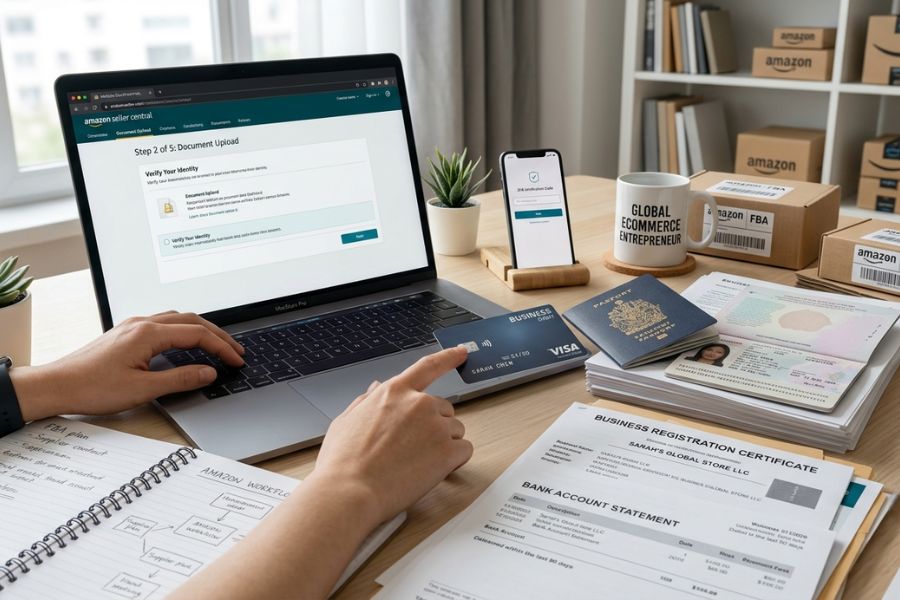
The first step in learning how to sell on Amazon is registering for an Amazon Seller account.
Visit sellercentrhttps://sellercentral.amazon.com/al.amazon.com (or your country’s Amazon Seller Central portal) and click Sign Up.
During registration, Amazon will ask you to provide:
- Your full legal name or business name
- Email address
- Mobile phone number
- Government-issued ID
- Bank account details
- Credit or debit card
- Tax information (varies by country)
Amazon may also require identity verification through a video call or document review. This process helps keep the marketplace safe for buyers and sellers.
Pro Tip
Use a professional business email address instead of a personal one. It creates a more organized setup and makes future business management easier.
Step 2: Choose the Right Selling Plan
Amazon offers two types of selling plans.
Individual Plan
The Individual plan is best if you:
- Sell fewer than 40 products per month
- Are testing the marketplace
- Want to avoid a monthly subscription fee
This plan charges a fee for each item sold, making it suitable for casual sellers.
Best For
- Beginners
- Hobby sellers
- People testing product ideas
Professional Plan
The Professional plan is designed for businesses that expect to sell more than 40 products each month.
Benefits include:
- Unlimited product listings
- Access to advertising tools
- Bulk listing features
- Advanced business reports
- Eligibility for certain selling categories
Best For
- Growing businesses
- Private label brands
- Wholesale sellers
- Long-term Amazon businesses
Which Plan Should You Choose?
If you’re serious about building a long-term Amazon business, the Professional plan is usually the better choice. It provides more tools for growth and marketing, even though it includes a monthly subscription fee.
If you’re still learning and want to minimize costs, starting with the Individual plan can also make sense.
Step 3: Choose a Profitable Product
One of the biggest factors that determines your success on Amazon is your product selection. Even the best marketing strategy cannot consistently sell a product that customers don’t want.
Before investing in inventory, evaluate products based on these factors:
High Demand
Look for products that customers actively search for throughout the year.
Signs of strong demand include:
- Consistent sales
- Healthy search volume
- Positive customer interest
- Stable market trends
Avoid products that only sell during a short holiday season unless you have a seasonal strategy.
Low to Medium Competition
Many beginners make the mistake of entering highly competitive markets.
Instead, focus on products where:
- Large brands don’t dominate every listing
- Customer reviews reveal unmet needs
- You can offer a better product or better value
Finding these opportunities gives new sellers a better chance to rank and generate sales.
Healthy Profit Margins
Don’t evaluate products based only on selling price.
Calculate your expected profit after subtracting:
- Product cost
- Shipping costs
- Amazon referral fees
- Fulfillment fees
- Packaging
- Advertising costs
- Returns
Many experienced sellers look for products that leave enough margin to support advertising while still generating profit.
Lightweight and Easy to Ship
Products that are compact and lightweight generally have lower storage and shipping costs, making them more profitable for many sellers.
Examples include:
- Kitchen accessories
- Pet supplies
- Office products
- Fitness accessories
- Home organization items
Large or heavy products often require higher shipping and storage fees, especially when using Amazon FBA.
Step 4: Source Your Products
Once you’ve chosen a product, the next step is finding a reliable supplier.
Amazon sellers can obtain inventory through multiple sourcing methods, depending on their business model and budget.
Private Label Manufacturing
Private labeling means working with a manufacturer to produce products under your own brand.
Advantages include:
- Better profit margins
- Brand ownership
- Greater control over product quality
- Long-term business value
This is one of the most popular business models for Amazon sellers.
Wholesale
Wholesale involves purchasing products in bulk from authorized distributors and reselling them on Amazon.
Benefits include:
- Faster launch
- Established products
- Lower branding costs
However, competition can be higher because multiple sellers may offer the same product.
Retail Arbitrage
Retail arbitrage means buying discounted products from local retail stores and selling them on Amazon for a profit. While this method requires a smaller investment, it may not scale as easily as private label or wholesale.
Online Arbitrage
Instead of physical stores, online arbitrage involves purchasing discounted products from online retailers and reselling them on Amazon. This model allows sellers to source products without visiting stores, making it convenient for many beginners.
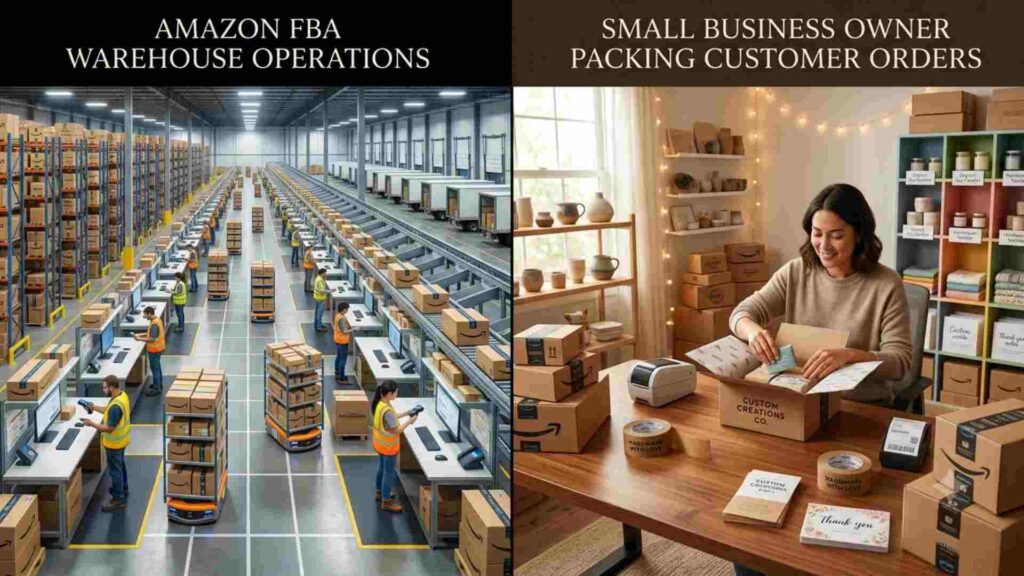
Step 5: Decide Between FBA and FBM
Before listing your products, you’ll need to choose how customer orders will be fulfilled.
Fulfillment by Amazon (FBA)
With FBA, you send inventory to Amazon’s fulfillment centers.
Amazon handles:
- Storage
- Packing
- Shipping
- Customer service
- Returns
Advantages
- Prime eligibility
- Faster shipping
- Less daily management
- Better customer experience
Fulfillment by Merchant (FBM)
With FBM, you store products yourself and ship every order directly to customers.
Advantages include:
- Greater control
- Lower storage costs
- Suitable for custom or oversized products
However, you’ll also be responsible for customer service and shipping operations.
Want to learn which fulfillment method is right for your business? Read our detailed guide on Amazon FBA vs FBM: Which Is Better in 2026? to compare costs, pros and cons, and find the best option based on your selling goals.
Step 6: Prepare for Your First Product Listing
Before creating your listing, make sure you have:
- A keyword-rich product title
- High-quality images
- Clear bullet points highlighting key benefits
- A detailed product description
- Accurate product specifications
- Competitive pricing
A well-optimized listing increases your chances of appearing in Amazon search results and converting visitors into buyers.
Step 7: Create a High-Converting Amazon Product Listing
Creating a product listing isn’t just about uploading photos and adding a title. Your listing is your digital salesperson. A well-optimized listing can increase visibility in Amazon search results and convince shoppers to click the Buy Now button.
If you’re learning how to sell on Amazon, mastering product listing optimization should be one of your top priorities.

Write a Keyword-Optimized Product Title
Your product title is one of the strongest ranking factors in Amazon’s search algorithm. It should clearly describe your product while naturally including important keywords.
A good title should include:
- Brand name
- Product name
- Main keyword
- Key feature
- Size, color, or quantity (if applicable)
Example
Premium Stainless Steel Water Bottle – 32 oz Vacuum Insulated Leakproof Sports Bottle
Avoid titles that:
- Use ALL CAPS
- Repeat the same keyword multiple times
- Include promotional phrases like “Best Seller” or “No.1 Product”
- Stuff unnecessary keywords
A clear, readable title improves both rankings and click-through rates.
Write Benefit-Focused Bullet Points
Many shoppers scan bullet points before reading the full description. Instead of listing only product features, explain how each feature benefits the customer.
Weak Example
- Stainless steel
- BPA-free
- Double-wall insulation
Better Example
- Keeps drinks cold for up to 24 hours and hot for up to 12 hours.
- BPA-free materials provide safe everyday use.
- Leakproof lid prevents spills while traveling or exercising.
- Durable stainless steel construction resists dents and rust.
- Its compact, lightweight construction makes it easy to carry and allows it to fit comfortably in most cup holders and backpacks.
This style answers customer questions before they ask them.
Create a Product Description That Sells
Your description should tell a story rather than simply repeating technical specifications.
A strong product description should:
- Explain who the product is for
- Describe the problem it solves
- Highlight major benefits
- Build trust
- End with a reason to purchase
Example Structure
Introduction
Briefly introduce the product and its purpose.
Features & Benefits
Explain why customers will enjoy using it.
Usage
Describe when and where the product works best.
Closing
Encourage buyers to place their order with confidence.
Always write naturally for people first. Amazon’s algorithm also rewards listings that provide a better customer experience.
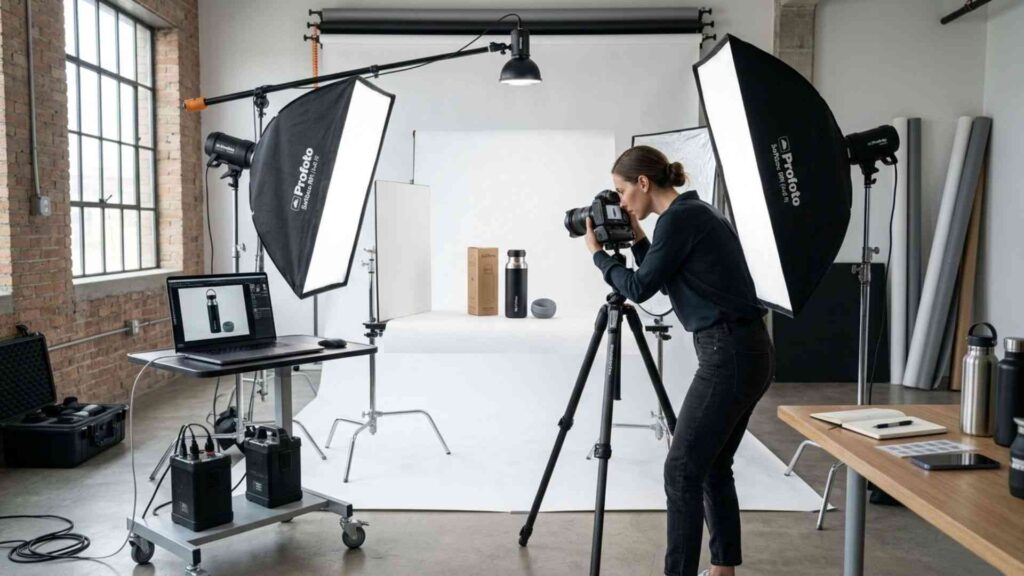
Use High-Quality Product Images
Images often influence purchasing decisions more than text. Customers cannot touch or test your product, so your photos must answer their questions visually.
Include a variety of images, such as:
- Main image with a clean white background
- Lifestyle images showing real-life use
- Close-up images highlighting important features
- Size comparison images
- Packaging photos
- Infographics explaining key benefits
Image Tips
- Use high-resolution images.
- Show the product from multiple angles.
- Avoid blurry or heavily edited photos.
- Highlight unique selling points visually.
- Follow Amazon’s image guidelines.
Professional photography can significantly improve conversion rates.
Price Your Product Competitively
Pricing affects both conversions and profitability. Setting your price too high may reduce sales, while pricing too low can leave little room for profit.
When deciding your price, consider:
- Manufacturing cost
- Shipping expenses
- Amazon referral fees
- Fulfillment fees
- Advertising budget
- Competitor pricing
- Desired profit margin
Many successful sellers start with a competitive introductory price to gain traction and reviews before making gradual adjustments.
Optimize Your Listing for Amazon SEO
Amazon’s search engine focuses on helping shoppers find products they are most likely to buy.
To improve your ranking:
Naturally Include Relevant Keywords
Place your primary keyword where it makes sense, including:
- Product title
- Bullet points
- Product description
- Backend search terms
Avoid keyword stuffing. Write naturally while ensuring important search terms appear in context.
Answer Customer Questions
Read competitor reviews and identify common concerns.
If buyers frequently ask about:
- Size
- Compatibility
- Materials
- Durability
- Warranty
Answer those questions directly within your listing. This improves customer confidence and may reduce returns.
Encourage Positive Reviews
Customer reviews influence both rankings and purchasing decisions.
You should never offer incentives for reviews, but you can:
- Deliver a quality product.
- Provide excellent customer service.
- Include clear instructions.
- Resolve customer issues quickly.
- Use Amazon’s “Request a Review” feature where available.
A higher average rating often leads to better conversion rates.
Win the Buy Box
The Buy Box is the section where customers can instantly purchase a product. Winning the Buy Box can dramatically increase your sales.
Amazon considers several factors, including:
- Competitive pricing
- Fast shipping
- Inventory availability
- Seller performance
- Customer satisfaction
- Order defect rate
While new sellers may not win the Buy Box immediately, consistently providing excellent service improves your chances over time.
Monitor Listing Performance
Publishing your listing is only the beginning.
Regularly review your product performance by tracking:
- Sessions (traffic)
- Conversion rate
- Sales
- Click-through rate
- Advertising performance
- Customer reviews
- Return rate
Use this data to improve titles, images, pricing, and advertising campaigns over time. Successful Amazon sellers continuously optimize their listings instead of leaving them unchanged for months.
Real-World Example
Imagine two sellers offering nearly identical kitchen organizers.
Seller A uploads a few low-quality images, writes a short title, and copies the manufacturer’s description.
Seller B improves product visibility by using high-quality images, researching relevant keywords, writing customer-focused product descriptions, responding to buyer inquiries, and continuously optimizing the listing for better search rankings.
Even if both products are similar, Seller B is far more likely to attract clicks, convert visitors into buyers, and build long-term success.
The lesson is simple: a well-optimized listing can become a competitive advantage.
Step 8: Launch Your Product Successfully
Publishing your product listing is only the beginning. The real challenge is getting your first sales and building momentum. A successful launch helps Amazon recognize that customers are interested in your product, which can improve your visibility in search results.
If you’re learning how to sell on Amazon, remember that the first few weeks after launching a product are critical.

Drive Traffic to Your Listing
Even with a well-optimized listing, customers need to find your product.
Here are some effective ways to increase visibility:
Amazon PPC (Pay-Per-Click)
Amazon PPC is one of the fastest ways to drive targeted traffic to a new listing. Your ads appear when shoppers search for relevant keywords, and you only pay when someone clicks.
For beginners, start with:
- Automatic campaigns to discover search terms
- A modest daily budget
- Regular monitoring of search term reports
Once you identify keywords that generate sales, create manual campaigns and focus your budget on high-performing terms.
Organic Amazon SEO
Advertising can help you get started, but long-term success comes from organic rankings.
To improve your organic visibility:
- Keep your product title relevant and readable.
- Include keywords naturally in bullet points and descriptions.
- Use high-quality images.
- Maintain competitive pricing.
- Encourage satisfied customers to leave reviews.
- Keep products in stock to avoid losing ranking.
Build Customer Trust
Customers are more likely to purchase from sellers they trust.
You can build credibility by:
- Providing accurate product descriptions
- Responding to customer questions quickly
- Shipping orders on time
- Resolving issues professionally
- Maintaining high product quality
Trust leads to better reviews, repeat customers, and stronger seller performance.
Understand Amazon Advertising Basics
Amazon offers several advertising options, but beginners should keep things simple.
Sponsored Products
These ads promote individual products directly in Amazon search results. They are ideal for launching new listings and increasing visibility.
Sponsored Brands
These ads showcase your brand logo and multiple products. They work best once you have a growing catalog and a registered brand.
Sponsored Display
These campaigns help you reach shoppers who have viewed similar products or interacted with your listings. Start with Sponsored Products before exploring advanced advertising options.
Monitor Key Performance Metrics
Successful sellers make decisions based on data, not guesswork.
Track these important metrics regularly:
Conversion Rate
The percentage of visitors who purchase your product. A low conversion rate may indicate issues with pricing, images, or listing content.
Click-Through Rate (CTR)
Shows how often shoppers click your listing after seeing it in search results. Improving your title and main image can increase CTR.
Advertising Cost of Sales (ACoS)
This measures how much you spend on advertising compared to the revenue generated. A lower ACoS generally indicates more efficient campaigns, though acceptable levels vary by product category and business goals.
Inventory Levels
Running out of stock can hurt your search rankings and sales history. Monitor inventory carefully and reorder before products sell out.

Choosing the right business model is just as important as creating your seller account. If you’re interested in selling established brands instead of developing your own products, explore our What Is Amazon Wholesale FBA? guide for a complete walkthrough.
Common Mistakes New Amazon Sellers Should Avoid
Many beginners lose time and money because they overlook the basics.
Avoid these common mistakes:
Choosing Products Without Research
Don’t select products simply because they look popular. Analyze demand, competition, profit margins, and customer reviews before investing.
Ignoring Amazon Fees
Referral fees, fulfillment fees, storage costs, and advertising expenses all affect profitability. Calculate your expected profit before placing inventory orders.
Poor Product Images
Blurry or low-quality photos can reduce customer confidence. Invest in professional images that clearly showcase your product.
Weak Product Listings
A listing with an unclear title, generic bullet points, or incomplete descriptions is less likely to convert visitors into buyers.
Overpricing or Underpricing
Research competing products before setting your price. A balanced pricing strategy attracts customers while protecting your profit margin.
Neglecting Customer Service
Responding promptly to customer inquiries and resolving issues professionally helps maintain strong seller metrics.
Tips for Long-Term Success
Building a successful Amazon business takes consistency and continuous improvement.
Here are some habits shared by experienced sellers:
- Regularly review your sales reports.
- Update listings based on customer feedback.
- Test new product images and pricing strategies.
- Expand into complementary product categories.
- Learn from competitors without copying them.
- Stay informed about Amazon policy updates.
- Reinvest profits into inventory and marketing.
Treat your Amazon store like a long-term business rather than a short-term project.
Expand Your Business Beyond One Product
Many successful sellers begin with a single product but grow by adding related items.
For example, if your first product is a reusable water bottle, you might later introduce:
- Bottle cleaning brushes
- Insulated lunch bags
- Travel mugs
- Fitness accessories
Offering complementary products can increase repeat purchases and strengthen your brand.
Can You Sell on Amazon Without Inventory?
Yes, depending on the business model you choose. Some sellers use dropshipping (while following Amazon’s policies), print-on-demand, or online arbitrage. However, many long-term businesses prefer Private Label, Wholesale, or Fulfillment by Amazon (FBA) because these models provide greater control over quality, branding, and customer experience.
Expert Insight
There isn’t a single formula for success on Amazon. Businesses that perform well usually focus on understanding customer needs, improving their listings over time, and making decisions based on data rather than assumptions.
Instead of trying to sell everything, aim to solve a specific customer problem with a high-quality product and an excellent buying experience.
Frequently Asked Questions
1. How much does it cost to start selling on Amazon?
The cost depends on your business model and the products you plan to sell. Your budget may include Amazon selling fees, inventory, shipping, product photography, branding, and advertising. Many beginners start with a modest investment and grow by reinvesting their profits.
2. Can beginners sell on Amazon?
Yes. Amazon is beginner-friendly, provided you take the time to learn the platform. With proper product research, optimized listings, and good customer service, even first-time sellers can build a successful business.
3. Do I need a business license to sell on Amazon?
The requirements vary by country and business structure. Some sellers start as individuals, while others register a business before opening their Amazon Seller account. Always check the legal and tax requirements in your country.
4. Which is better: Amazon FBA or FBM?
Neither option is universally better—it depends on your business goals.
- Amazon FBA is ideal if you want Amazon to handle storage, packing, shipping, and customer service.
- Amazon FBM gives you more control over inventory and fulfillment.
If you’re unsure which model fits your business, read our detailed guide on Amazon FBA vs FBM: Which Is Better in 2026?
5. How long does it take to make your first sale?
Some sellers receive orders within days, while others take several weeks. Product demand, competition, pricing, listing quality, and advertising all influence how quickly you generate sales.
6. What are the best products to sell on Amazon?
There is no single “best” product. Look for items with:
- Consistent demand
- Low to medium competition
- Healthy profit margins
- Positive customer feedback
- Opportunities for improvement
Thorough product research is more important than chasing trends.
7. Can I sell internationally on Amazon?
Yes. Many sellers start in one marketplace and later expand into other countries. Amazon provides tools that make international selling easier, allowing businesses to reach customers around the world.