Introduction
For businesses looking to expand online, understanding what Amazon Marketplace is can open the door to significant growth opportunities. As one of the world’s largest eCommerce selling platforms, Amazon Marketplace enables third-party sellers to reach millions of customers without building their own large-scale online store.
Many business owners often ask, what is Amazon Market and how it differs from selling directly through Amazon. While the names can seem similar, Amazon Marketplace operates as a platform where independent sellers list and manage their own products. This guide explains how it works, its benefits, challenges, and why it has become a preferred choice for businesses of all sizes.

What Is Amazon Marketplace?
The answer to what is the Amazon Marketplace is quite simple. Amazon Marketplace is an online selling platform that allows third-party individuals and businesses to sell products directly to customers through Amazon’s website. Instead of Amazon owning every product available, millions of independent sellers can create listings and manage their own inventory.
Many people wonder, is Amazon Marketplace the same as Amazon? The short answer is no. Amazon itself sells products as a retailer, while Amazon Marketplace provides a space where external sellers can reach Amazon’s massive customer base.
Understanding what is the difference between Amazon and Amazon Marketplace helps businesses choose the right selling model. Amazon Retail involves products purchased and sold by Amazon, whereas Marketplace allows independent businesses to maintain ownership of their inventory and pricing.
How Does Amazon Marketplace Work?
Selling through Amazon Marketplace follows a straightforward process that makes it accessible for both beginners and experienced businesses.
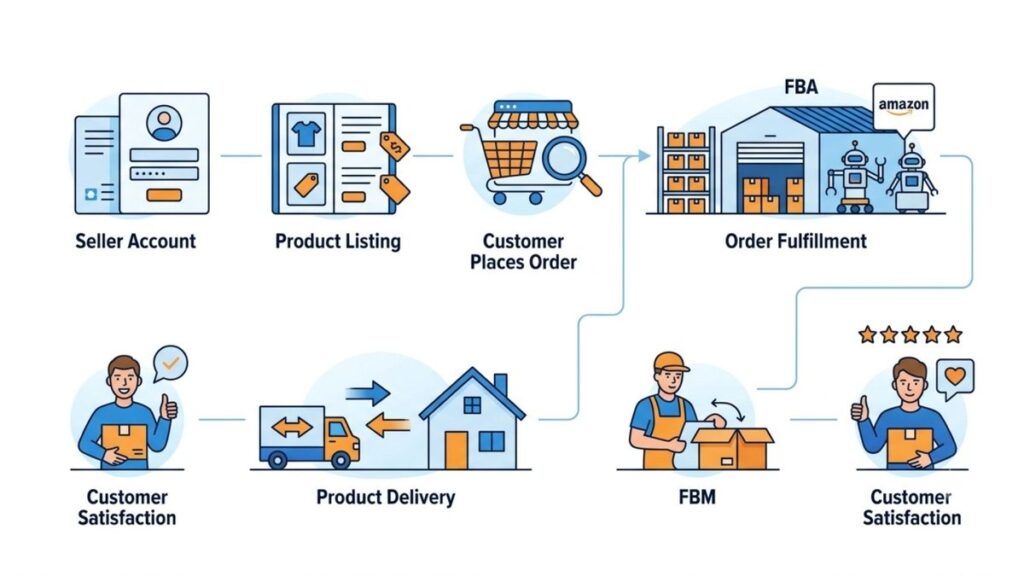
Creating a Seller Account
The first step is registering for an Amazon Seller account. Businesses can choose the account type that best fits their sales volume and goals.
Listing Products
After registration, sellers create product listings that include titles, descriptions, images, pricing, and product specifications. Well-optimized listings improve visibility and help customers make informed purchasing decisions.
Customers Place Orders
When shoppers purchase products, Amazon securely processes the payment while notifying sellers about new orders.
Order Fulfillment Options
Sellers have two primary fulfillment choices:
- Fulfillment by Amazon (FBA): Amazon stores, packs, ships, and handles customer service.
- Fulfillment by Merchant (FBM): Sellers manage storage, shipping, and customer support themselves.
Businesses also explore marketplace fulfillment solutions to improve delivery speed and customer satisfaction while maintaining operational efficiency.
Receiving Payments
Amazon deducts applicable fees and transfers the remaining balance to the seller according to its payment schedule.
Once you understand how Amazon Marketplace works, the next important decision is choosing the right fulfillment model. Read our detailed guide on Amazon FBA vs FBM: Which Is Better in 2026? to compare both options and decide which one fits your business.
Types of Amazon Marketplace Seller Accounts
Individual Seller Account
This account is suitable for occasional sellers who have limited inventory. It allows businesses to start selling without committing to a monthly subscription.
Pros
- Low initial commitment
- Suitable for beginners
Cons
- Per-item selling fee
- Limited advanced selling features
Professional Seller Account
Professional accounts are designed for growing businesses and established brands that expect consistent sales.
Pros
- Unlimited product listings
- Access to advanced reporting
- Advertising options
- Bulk inventory management
Cons
- Monthly subscription fee
Key Features of Amazon Marketplace
Amazon Marketplace offers several features that help businesses grow online.
- Access to millions of active shoppers worldwide.
- Secure payment processing for buyers and sellers.
- Customer reviews and ratings that build trust.
- Inventory management tools.
- Business performance reports.
- Global selling opportunities.
- Brand protection programs.
Many businesses also rely on Amazon Marketplace tools to automate inventory management, pricing updates, keyword research, and performance tracking, making daily operations much more efficient.
Benefits of Selling on Amazon Marketplace
Increased Brand Visibility
Selling on Amazon exposes businesses to customers who may never discover an independent online store.
Access to Millions of Customers
Amazon’s global audience provides businesses with opportunities to increase sales without investing heavily in customer acquisition.
Easy Business Scalability
Whether selling a handful of products or thousands, Amazon Marketplace supports businesses as they grow.
Trusted Shopping Experience
Customers already trust Amazon’s checkout process, shipping reliability, and return policies, making purchases easier.
Fast Shipping with FBA
Using Fulfillment by Amazon allows sellers to provide quick shipping and reliable customer service without managing logistics themselves.
International Expansion Opportunities
Businesses interested in global markets can expand into multiple countries through Amazon Marketplace. Selling on Amazon Marketplace allows businesses to reach millions of international customers across North America, Europe, Asia, and other regions. With the right strategy, sellers can grow their brand globally, increase revenue, and expand into new markets without building separate eCommerce websites for each country.

Challenges of Amazon Marketplace
Despite its advantages, Amazon Marketplace also presents challenges.
- Strong competition across nearly every product category.
- Various seller and fulfillment fees.
- Strict performance metrics and policies.
- Pricing pressure from competing sellers.
- Inventory management responsibilities.
- Risk of account suspension for policy violations.
Businesses often invest in Amazon Marketplace management services to improve compliance, optimize listings, and maintain healthy account performance.

Amazon Marketplace Fees
Before selling, businesses should understand the main costs involved.
Referral Fees
Amazon charges a percentage of each sale depending on the product category.
Subscription Fees
Professional sellers pay a monthly subscription, while Individual sellers pay per item sold.
FBA Fees
Businesses using Fulfillment by Amazon pay storage, picking, packing, and shipping fees.
Storage Fees
Products stored in Amazon fulfillment centers incur monthly storage charges.
Advertising Costs
Many sellers invest in Amazon Marketplace advertising to increase product visibility, drive traffic, and improve sales performance.
Amazon Marketplace vs. Amazon Store
Many new sellers compare Amazon vs Amazon Marketplace before launching their business.
An Amazon Store is a customized branded storefront created by registered brands inside Amazon. Amazon Marketplace, on the other hand, is the broader platform where third-party sellers list and sell products.
Similarly, comparisons like Amazon Marketplace vs Amazon, Amazon Marketplace vs Amazon.com, Amazon.com vs Amazon Marketplace, and Amazon Retail vs Amazon Marketplace all focus on understanding whether products are sold directly by Amazon or by independent sellers using Amazon’s platform.

Amazon Marketplace vs. Other eCommerce Platforms
Every online selling platform has unique strengths.
Amazon Marketplace vs Shopify
Shopify provides businesses with complete control over branding and website design, while Amazon Marketplace offers immediate access to a large customer base.
Amazon Marketplace vs eBay
eBay is well known for auctions and collectibles, whereas Amazon focuses on standardized retail shopping experiences.
Amazon Marketplace vs Walmart Marketplace
Walmart Marketplace continues to grow but generally has fewer sellers and customers compared to Amazon’s extensive global ecosystem.
Businesses evaluating platform vs marketplace should understand that a marketplace connects buyers and multiple sellers, while a platform may simply provide the technology needed to build an online business.
Some entrepreneurs also compare other sites like Facebook Marketplace when deciding where to begin selling, depending on their products and target audience.
Who Should Sell on Amazon Marketplace?
Amazon Marketplace is suitable for:
- Small businesses
- Manufacturers
- Private label brands
- Wholesalers
- Retail arbitrage sellers
- Handmade product creators
- Growing eCommerce businesses
Nearly any business with quality products and a customer-focused strategy can benefit from Amazon Marketplace.
Tips for Success on Amazon Marketplace
Businesses achieve better long-term results by following several best practices:
- Optimize product titles and descriptions.
- Use professional product images.
- Conduct keyword research.
- Price products competitively.
- Maintain healthy inventory levels.
- Deliver excellent customer service.
- Encourage genuine customer reviews.
- Monitor account performance regularly.
- Use advertising strategically for greater visibility.

Common Mistakes to Avoid
New sellers often encounter avoidable mistakes, including:
- Writing poor product descriptions.
- Ignoring keyword optimization.
- Running out of inventory.
- Violating Amazon policies.
- Underpricing products.
- Neglecting customer support.
- Failing to monitor account health.
Avoiding these issues helps businesses build sustainable growth over time.
Frequently Asked Questions
Is Amazon Marketplace free to join?
Yes. Sellers can create an Individual Seller account without paying a monthly subscription, although selling fees still apply.
Can beginners sell on Amazon Marketplace?
Yes. Amazon Marketplace is beginner-friendly and provides resources for new sellers.
What products can be sold?
Most consumer products can be sold, although certain categories require approval.
Is Amazon Marketplace available worldwide?
Amazon operates multiple marketplaces across different countries, allowing businesses to expand internationally.
What is the difference between FBA and FBM?
FBA allows Amazon to manage storage and shipping, while FBM requires sellers to fulfill orders themselves.
How much does Amazon charge sellers?
Fees vary depending on product category, fulfillment method, subscription type, and advertising spend.
Conclusion
Understanding what Amazon Marketplace is helps businesses make informed decisions about expanding into eCommerce. Unlike Amazon Retail, Marketplace gives independent sellers direct access to millions of customers while allowing them to control pricing, inventory, and business growth.
Although selling on Amazon involves competition and operational responsibilities, the platform provides valuable opportunities for businesses willing to invest in optimization, customer service, and long-term strategy. With the right approach, Amazon Marketplace can become an important sales channel for brands seeking sustainable online growth.