
Choosing the right product is one of the most important decisions you will make as an Amazon seller. A product may attract thousands of buyers, but that does not automatically mean it will generate a profit. Competition, sourcing costs, Amazon fees, advertising expenses, and customer expectations all affect your results.
If you are planning to launch an Amazon business in 2027, the goal should be to find products that solve real problems, have measurable customer demand, and offer opportunities to stand out from competing sellers.
This guide explores 35 product ideas across seven categories, from home organization and pet supplies to travel accessories and craft products. You will also learn how to evaluate demand, identify competition, and estimate profitability before investing in inventory.
These are product research ideas, not guaranteed bestsellers. Always validate each opportunity using current marketplace data before making a purchasing decision.
How to Choose the Best Products to Sell on Amazon
Before exploring individual product ideas, understand what makes a product worth researching.
Look for Consistent Customer Demand
Products that solve everyday problems can offer more predictable demand than items that depend entirely on short-lived trends. Kitchen organizers, pet accessories, and travel storage products are examples worth investigating.
Use Amazon Best Sellers, Movers & Shakers, and Google Trends to identify popular products and understand how interest changes over time.
Evaluate Competition
A popular product category may already contain established brands, thousands of reviews, and sellers competing aggressively on price.
Examine the first page of Amazon search results. Look at review counts, product quality, pricing, listing images, and customer complaints. These details may reveal opportunities to create a more useful alternative.
Calculate Profit Potential
Revenue is not the same as profit. Before selecting a product, account for manufacturing, shipping, packaging, Amazon referral fees, fulfillment, advertising, returns, and other operating expenses.
A product with a higher selling price is not necessarily more profitable than a smaller, less expensive alternative.
Consider Size, Weight, and Complexity
Compact, lightweight products can sometimes offer lower shipping and fulfillment costs. Simple products may also be easier to inspect, package, and manage.
However, size alone should not determine your decision. The product’s complete cost structure and demand matter more than any single characteristic.
35 Best Products to Sell on Amazon in 2026
The following ideas cover a range of customer needs. Each represents a potential opportunity to research rather than a prediction that the product will become a bestseller in 2027.
Home and Kitchen Products
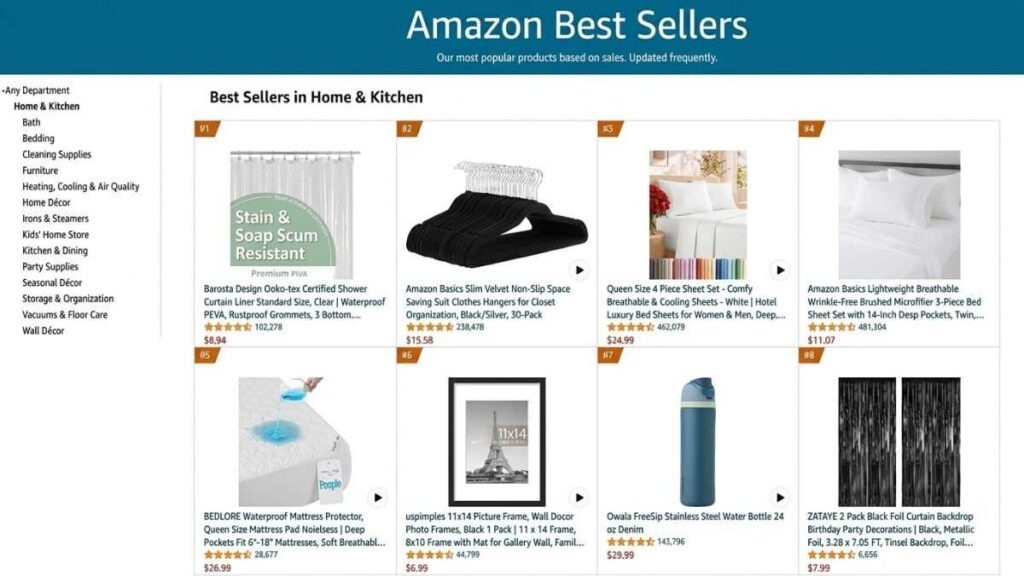
Home products can be attractive because they address practical needs such as organization, storage, and everyday convenience.
1. Drawer Organizers
Drawer organizers help customers arrange utensils, office supplies, cosmetics, and other small items. Consider adjustable designs, expandable compartments, or sets designed for specific drawer dimensions.
2. Under-Sink Storage Organizers
These organizers help customers use the space beneath kitchen and bathroom sinks. Two-tier designs, removable baskets, and adjustable shelving may offer useful differentiation.
3. Reusable Food Storage Bags
Reusable storage bags appeal to customers looking for alternatives to disposable food storage products. Material quality, leak resistance, cleaning instructions, and durability are important product considerations.
4. Pantry Organization Containers
Food storage containers help customers organize dry goods, reduce clutter, and identify pantry contents easily. Research sets with practical sizes, reliable seals, and stackable designs.
5. Cable Management Boxes
Cable management boxes conceal power strips and excess cables around desks, entertainment units, and home offices. Safety, ventilation, dimensions, and material quality should guide product selection.
Beauty and Personal Care Accessories
Personal care accessories offer opportunities for product bundles, thoughtful design, and niche positioning. Research applicable safety requirements and marketplace restrictions before entering this category.
6. Makeup Organizer Cases
Makeup organizers help customers store brushes, palettes, and everyday cosmetics. Portable designs, removable dividers, and easy-to-clean materials may appeal to specific customer groups.
7. Heatless Hair Styling Accessories
Heatless curling accessories are designed for customers who want to style their hair without conventional heated tools. Fabric comfort, durability, ease of use, and clear instructions are important differentiators.
8. Makeup Brush Cleaning Accessories
Brush cleaning mats and manual cleaning tools help customers maintain their makeup brushes. Look for practical designs, durable materials, and compatibility with different brush sizes.
9. Cosmetic Travel Bags
Cosmetic travel bags help customers organize toiletries and makeup while traveling. Water-resistant materials, compartments, sturdy zippers, and compact dimensions can make a product more appealing.
10. Reusable Facial Cleansing Cloths
Reusable cleansing cloths appeal to customers interested in reusable personal care accessories. Fabric softness, washability, durability, and packaging quality are important factors to evaluate.
Pet Supplies
Pet owners purchase products for feeding, grooming, cleaning, and everyday convenience. Focus on products that solve specific problems and are safe for their intended use.
11. Pet Hair Removers
Pet hair removal tools help customers clean furniture, clothing, and upholstery. Research reusable designs, ease of cleaning, and performance on different fabric types.
12. Slow-Feeder Pet Bowls
Slow-feeder bowls are designed to encourage slower eating through built-in ridges or compartments. Material safety, stability, cleaning requirements, and suitable pet sizes matter.
13. Collapsible Travel Bowls
Portable pet bowls are useful for walks, road trips, and outdoor activities. Lightweight materials, leak resistance, and convenient attachment options may help differentiate a product.
14. Pet Toy Storage Baskets
Storage baskets help pet owners organize toys, grooming supplies, and accessories. Durable construction, easy cleaning, and designs that fit common home spaces are worth investigating.
15. Pet Grooming Gloves
Grooming gloves allow owners to brush loose hair from their pets using a wearable design. Fit, cleaning convenience, material quality, and suitability for different coat types can influence customer satisfaction.
Sports and Fitness Accessories
Fitness accessories serve customers who exercise at home, outdoors, or in gyms. Products should be evaluated for durability, intended use, and relevant safety considerations.
16. Resistance Band Sets
Resistance bands support a variety of home workouts and mobility exercises. Research material quality, resistance consistency, storage options, and clear usage instructions.
17. Yoga Blocks
Yoga blocks help users modify poses and improve support during practice. Density, grip, dimensions, and surface texture are important considerations.
18. Exercise Mat Storage Straps
Storage straps make it easier to carry or store exercise mats. Adjustable sizing, stitching strength, and comfort can distinguish one design from another.
19. Workout Accessory Bags
Small fitness bags organize resistance bands, skipping ropes, gloves, and other workout accessories. Compartment layout, durability, and portability may appeal to specific audiences.
20. Massage and Recovery Accessories
Manual massage balls and similar recovery accessories serve customers looking for simple fitness tools. Product quality, clear instructions, and responsible marketing are essential; avoid unsupported medical claims.
Office and Desk Accessories
Remote work, studying, and home offices create opportunities for products that improve organization and workspace comfort.
21. Desk Cable Organizers
Cable clips and desk cable holders help prevent charging and computer cables from becoming tangled. Adhesive quality, cable compatibility, and surface compatibility are useful features to assess.
22. Laptop Stands
Laptop stands can help organize desk space and position a laptop at a more comfortable viewing height. Stability, adjustability, ventilation, and compatibility with different devices are important.
23. Desk Drawer Organizers
Compact organizers help customers arrange pens, stationery, charging accessories, and other small office supplies. Modular compartments and practical dimensions may provide differentiation.
24. Monitor Memo Boards
Memo boards attach to compatible monitor edges and provide space for reminders, notes, or small accessories. Check compatibility, attachment strength, and whether the design obstructs the screen.
25. Cable Labels and Identification Kits
Cable labels help users identify power cords and device connections in home offices and entertainment setups. Readability, adhesive performance, and label variety can improve usability.
Travel and Organization Products
Travel accessories are worth researching for customers who want to pack efficiently, organize luggage, or simplify everyday journeys.
26. Packing Cubes
Packing cubes divide luggage into organized compartments for clothing and accessories. Different sizes, durable zippers, lightweight materials, and compression features may help a product stand out.
27. Toiletry Travel Organizers
Travel toiletry bags organize grooming products and personal care essentials. Hanging hooks, separate compartments, and easy-to-clean materials are potential selling points.
28. Luggage Organizer Pouches
Small pouches help travelers separate electronics accessories, documents, chargers, and personal items. Clear labeling, useful sizes, and durable construction may appeal to frequent travelers.
29. Reusable Travel Laundry Bags
Laundry bags separate worn clothing from clean items during trips. Lightweight construction, washable fabric, and secure closures are features worth investigating.
30. Electronics Travel Organizers
Electronics organizers store cables, adapters, power banks, and other small devices. Padding, compartment flexibility, and compatibility with common accessories may offer opportunities for differentiation.
Arts, Crafts, and Hobby Products
Hobby products can appeal to specific customer communities. Narrow audiences may provide opportunities to develop targeted bundles and specialized designs.
31. Crochet Starter Kits
Crochet kits can combine yarn, hooks, instructions, and storage accessories. Beginners may value clear instructions, suitable materials, and well-organized packaging.
32. Craft Storage Organizers
Storage boxes help hobbyists organize beads, sewing accessories, miniature supplies, and other small materials. Adjustable compartments, secure closures, and transparent sections are useful features.
33. Journaling Supplies
Journaling accessories such as stencil sets, decorative stickers, and reusable templates appeal to customers who enjoy planning and creative writing. Original designs and coordinated bundles may help distinguish a listing.
34. Embroidery Starter Kits
Embroidery kits can include fabric, thread, needles, and patterns for beginner projects. Research pattern quality, material completeness, and instruction clarity before choosing a supplier.
35. Diamond Painting Storage Accessories
Storage cases and sorting containers help diamond painting enthusiasts organize small colored pieces and tools. Secure lids, clear labeling, and practical compartment sizes are possible differentiators.
How to Find Trending Products to Sell on Amazon
A product idea is only a starting point. Research helps determine whether customers are buying similar products and whether a new offer has a realistic chance of competing.
Use Amazon Best Sellers
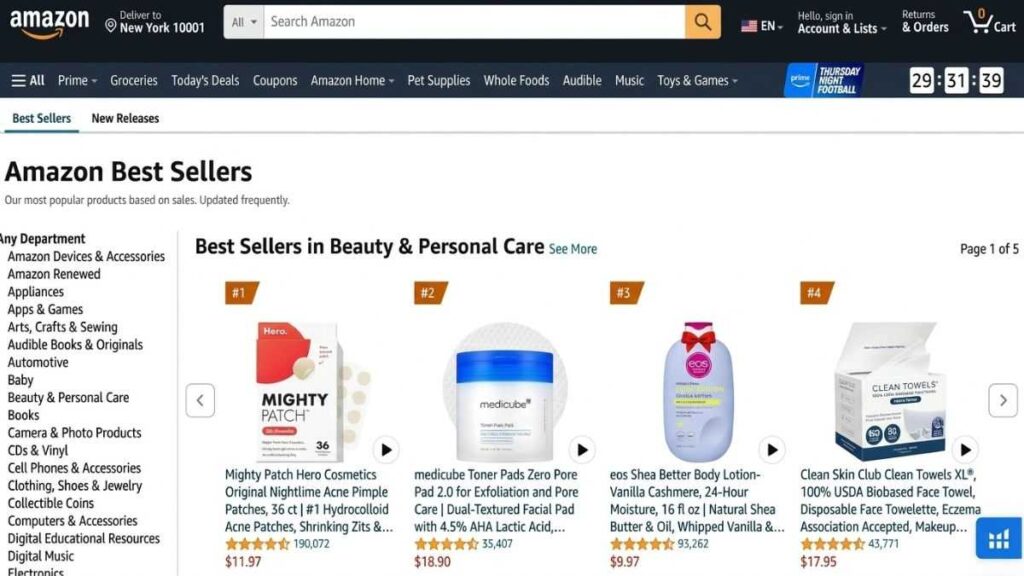
Amazon Best Sellers ranks popular products within individual categories. Review several relevant subcategories rather than relying on the overall bestseller list alone.
Visit the Amazon Best Sellers page to explore current rankings. Remember that rankings change, and a product’s popularity does not establish its profitability.
Analyze Movers & Shakers
Movers & Shakers highlights products experiencing significant improvements in sales rank. It can help identify emerging interest, but short-term movement does not necessarily indicate sustainable demand.
Investigate whether interest persists and whether the product has seasonal or promotional factors affecting its performance.
Research Customer Demand and Competition
Amazon’s Product Opportunity Explorer provides marketplace insights that can help sellers evaluate search activity, customer purchasing behavior, competition, reviews, and seasonality.
Use these insights to identify unmet customer needs. For example, repeated complaints about weak zippers, poor sizing, or difficult cleaning may reveal an opportunity to improve an existing product.
You can learn more through Amazon Product Opportunity Explorer.
Validate Trends With Google Trends
Google Trends helps compare interest in related search terms over time. It can reveal seasonal patterns and whether attention is rising or declining.
For example, compare interest in travel organizers throughout the year instead of assuming demand will remain constant. Google Trends measures relative search interest, not Amazon sales or actual product profitability.
Visit Google Trends to begin your research.
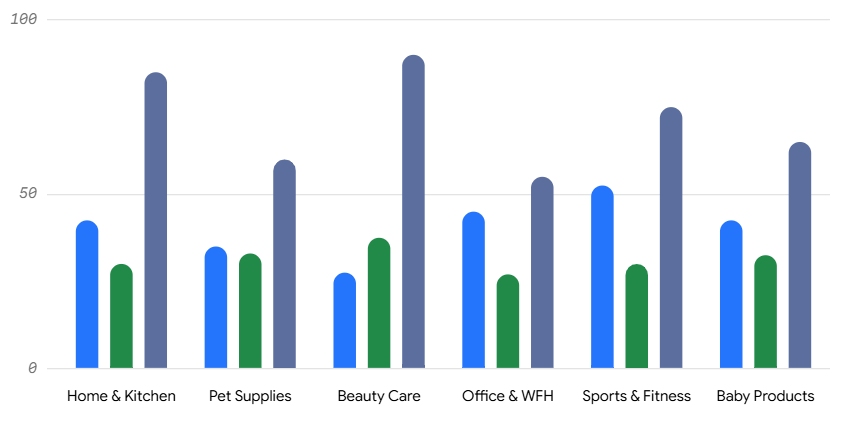
Top Amazon Categories Comparison Matrix (2026)
| Category | Average Price Point | Net Profit Margin Range | Competition Level | FBA Logistics Complexity | Ideal For |
| Home & Kitchen | $25 – $60 | 25% – 35% | High | Low – Medium | Beginners & Private Label |
| Pet Supplies | $20 – $50 | 28% – 38% | Medium | Low | Repeat Orders & Brand Building |
| Beauty & Personal Care | $15 – $40 | 30% – 45% | Very High | Very Low (Compact) | Social Commerce & High Margins |
| Office & WFH Essentials | $20 – $70 | 22% – 32% | Medium | Low | B2B & Amazon Business |
| Sports & Fitness | $25 – $80 | 25% – 35% | High | Medium | Evergreen Year-round Demand |
| Baby Products | $20 – $65 | 25% – 40% | Medium – High | Low | Safety-conscious Loyal Buyers |
How to Calculate Profitability Before Selling
One of the biggest mistakes new sellers make is selecting products based on selling price alone. A reliable evaluation includes all significant costs.
Consider this illustrative example for a product sold through Amazon FBA:
| Expense | Example amount |
|---|---|
| Selling price | $30.00 |
| Product and packaging cost | $8.00 |
| Shipping and inbound logistics | $2.00 |
| Amazon referral fee | $4.50 |
| FBA fulfillment fee | $4.00 |
| Advertising cost per sale | $3.00 |
| Estimated returns and other costs | $1.00 |
| Estimated profit per unit | $7.50 |
These figures are illustrative, not current Amazon fee quotes. Actual fees depend on product dimensions, weight, category, fulfillment method, and other factors.
In this example, the estimated profit margin is 25% of the selling price.
Profit margin formula:
Profit Margin = (Net Profit ÷ Selling Price) × 100
For this example:
($7.50 ÷ $30) × 100 = 25%
For a fuller analysis, include recurring software expenses, storage, taxes where applicable, discounts, and other relevant costs. Also distinguish contribution profit per unit from total business profit after fixed operating expenses.
For additional guidance, read our Amazon FBA profit margin guide.
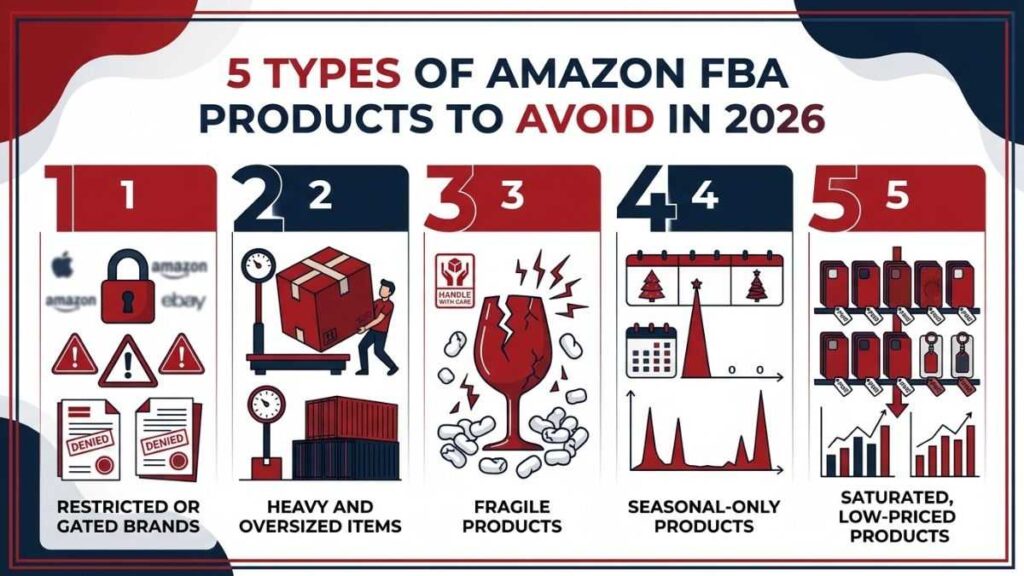
5 Types of Amazon FBA Products to Avoid in 2026
1. Restricted or gated brands
Some brands only allow approved sellers. If you list their products without permission, Amazon can remove your listings and flag your account. Check brand and category restrictions before placing any order.
2. Heavy and oversized items
FBA fulfillment and storage fees rise quickly with weight and size. A product with a strong margin on your spreadsheet can turn unprofitable once oversized fees are added.
3. Fragile products
Glass, ceramics and delicate electronics break easily in transit. That means more returns, more refunds and more lost inventory, all of which cut into your profit.
4. Seasonal-only products
Items that sell only at certain times of year leave you holding stock in the off-season. Unsold inventory can trigger long-term storage fees. Unless the seasonal margins are very high, it is usually not worth the risk.
5. Saturated, low-priced products
When dozens of sellers compete on a $10-$15 product, prices get pushed down and margins disappear. Crowded listings also tend to bring more intellectual property complaints, which can put your account at risk.
Common Mistakes to Avoid When Choosing Amazon Products
Even promising product ideas can fail when sellers overlook important risks.
Choosing Products Only Because They Are Trending
A temporary surge in interest can disappear before your inventory sells. Review longer-term demand, seasonal patterns, and customer purchasing behavior.
Competing Only on Price
Established sellers may have lower sourcing costs, stronger reviews, or more efficient operations. Consider product improvements, better bundles, clearer instructions, and more useful packaging rather than relying exclusively on discounts.
Ignoring Restricted Categories
Some products require approvals, documentation, testing, or compliance with specific marketplace rules. Check the applicable Amazon requirements before placing a supplier order, especially for products involving batteries, cosmetics, food, or safety-sensitive uses.
Ordering Too Much Inventory Too Early
Large initial orders increase financial exposure if demand is weaker than expected. Request samples, calculate landed costs, validate demand, and plan inventory conservatively.
Overlooking Customer Feedback
Negative reviews can reveal recurring problems with existing products. However, not every complaint represents a commercially viable opportunity. Determine whether the issue can be solved affordably and whether enough customers share the same need.
Frequently Asked Questions
What are the best products to sell on Amazon in 2026?
Potential opportunities include home organization products, pet accessories, fitness tools, travel organizers, office accessories, and craft supplies. The best choice depends on current demand, competition, sourcing costs, and your ability to differentiate the product.
Which product sells the most on Amazon?
No single product leads, as rankings change hourly. The top categories are electronics, home and kitchen, beauty, health and household, and pet supplies. Everyday essentials sell in the highest volume.
What is the #1 product sold on Amazon?
The #1 product changes constantly, so any fixed answer goes out of date quickly. The best way to find it is Amazon’s Best Sellers page, which is refreshed hourly. The Movers & Shakers list shows products whose sales are rising fast.
What sells quickly on Amazon?
Products with steady demand, healthy margins and repeat buyers sell fastest:
- Consumables: supplements, skincare and pet products
- Home and kitchen basics: insulated tumblers, water bottles, bedding and candles
- Specific niche products: a focused item for a defined buyer usually beats a broad one
Can you make $10,000 a month selling on Amazon?
Yes, but it’s not typical. Sellers usually keep 10-25% of sales after fees, ads and costs, so $10,000 profit needs roughly $50,000-$100,000 in monthly sales. Most sellers take 6-18 months to reach that level.
What products are easiest for beginners to sell on Amazon?
Simple, compact, durable products with manageable sourcing costs can be easier to evaluate and operate. However, beginners should still check competition, fees, restrictions, and customer demand before investing.
Are high-demand Amazon products always profitable?
No. High demand can attract many competing sellers and increase advertising costs. Profitability depends on selling price, total costs, competition, returns, and how effectively you differentiate your offer.
How do I find low-competition products on Amazon?
Explore specific subcategories, analyze competing listings and customer reviews, and use available product research tools. Look for unmet customer needs rather than assuming that a low review count or low sales rank automatically signals an opportunity.
How much money do I need to start selling on Amazon?
There is no universal startup budget. Your investment depends on inventory quantity, product cost, shipping, packaging, selling plan fees, advertising, and other expenses. Estimate the full cost of launching and maintaining your chosen product before committing capital.
Conclusion
Finding the best products to sell on Amazon in 2026 requires more than following a trending-product list. Successful product selection begins with customer demand, careful competition analysis, realistic cost calculations, and a clear reason for customers to choose your offer.
Start with a few promising ideas from this guide. Research their performance, inspect competing listings, identify customer complaints, and estimate your profit after Amazon fees and operating costs. Validate the opportunity before ordering inventory.
If you need help identifying and evaluating product opportunities for your Amazon business, explore eCommerce Apex’s Amazon Private Label services. Our team can help you approach product research and business growth with a more structured strategy.